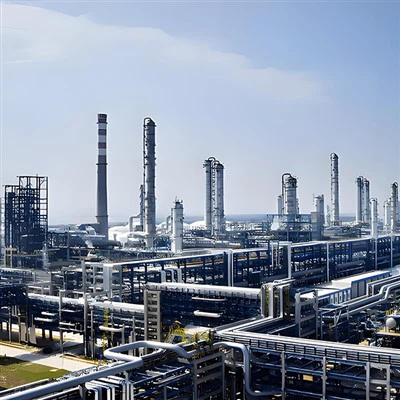
Fired heater tube overheating is one of the most serious reliability problems in refinery and petrochemical heating systems. It can accelerate tube deterioration, increase maintenance costs, reduce production efficiency, and, in severe cases, lead to tube rupture and fire.
For plant operators and maintenance engineers, the challenge is identifying overheating before irreversible damage occurs.
A tube can experience excessive metal temperature even when the heater's overall outlet temperature appears normal. Problems such as internal coking, low process flow, flame impingement, and uneven heat distribution may create localized hot spots that are not immediately visible in routine operating data.
This guide explains the seven major causes of fired heater tube overheating, the warning signs engineers should monitor, and practical methods for prevention. It also discusses when tube replacement or a complete heater retrofit should be considered.

1. What Is Fired Heater Tube Overheating?
Fired heater tube overheating occurs when the metal temperature of a process tube exceeds the acceptable operating or design limits for its material and service conditions.
In a refinery fired heater, process tubes absorb heat from the combustion chamber and transfer it to the fluid flowing inside them.
The process fluid also helps cool the tube wall. When heat input becomes excessive or process-side cooling decreases, the tube-metal temperature can rise.
The consequences depend on the severity and duration of the temperature excursion.
Short-term overheating can weaken the tube material rapidly and may lead to localized deformation or rupture.
Long-term overheating can accelerate creep damage, oxidation, and other temperature-dependent deterioration mechanisms.
For tubes operating in the creep range, remaining life depends on temperature history, stress, material properties, and accumulated damage-not simply on the current wall thickness.
OnePetro+1
Why tube-metal temperature matters more than outlet temperature alone
Consider a hypothetical fired heater operating under the following conditions:
|
Operating Parameter |
Illustrative Value |
|---|---|
|
Process Inlet Temperature |
280°C |
|
Process Outlet Temperature |
360°C |
|
Normal Tube-Metal Temperature |
430°C |
|
Localized Hot-Spot Temperature |
510°C |
|
Process Flow |
40,000 kg/h |
These are illustrative values, not recommended operating limits.
The process outlet temperature may remain close to its target while a localized section of tubing experiences a significantly higher temperature.
Whether 510°C is acceptable depends on the tube alloy, stress, design basis, operating history, and applicable engineering requirements.
Key takeaway: Never use the process outlet temperature as the only indicator of fired heater tube integrity.
2. Seven Common Causes of Fired Heater Tube Overheating
Cause 1: Internal Coking and Fouling
Internal coking is a major concern in fired heaters handling hydrocarbon streams susceptible to thermal degradation.
When coke deposits form inside a process tube, they create additional resistance to heat transfer.
The tube wall may then need to operate at a higher temperature to transfer the required heat to the fluid.
Coking can also increase process-side pressure drop and reduce flow through affected passages.
Common warning signs
Gradually increasing tube-metal temperature
Increasing coil or pass pressure drop under comparable conditions
Uneven outlet temperatures between passes
Declining heat-transfer performance
Increasing frequency of cleaning or decoking
How to prevent it
Maintain suitable process flow and heat-flux conditions, monitor pressure-drop trends, review feed composition changes, and implement an appropriate inspection and cleaning strategy.
For severe fouling services, engineers should also evaluate whether the original coil arrangement remains suitable.
Engineering insight: Increasing the firing rate to compensate for reduced heat transfer may worsen tube overheating if internal deposits are already restricting heat transfer.
Cause 2: Low Process Flow Rate
Process fluid removes heat from the tube wall.
When the flow rate decreases, the process-side heat-transfer coefficient may decline. Depending on the service, this can cause the tube-metal temperature to rise rapidly.
Low flow may result from pump problems, control-valve malfunction, process restrictions, blocked strainers, or changes in operating conditions.
In multi-pass heaters, the problem may affect only one pass while the total heater flow appears acceptable.
Common warning signs
A sudden increase in tube-metal temperature
Low-flow alarms
Uneven pass outlet temperatures
Unexpected changes in process pressure drop
Abnormal process temperature response
How to prevent it
Specify appropriate minimum-flow requirements, monitor individual passes where applicable, maintain flow-control instrumentation, and review protective functions against credible low-flow scenarios.
In a multi-pass heater, combined outlet temperature alone may not adequately reveal a problem in one pass.
A 2025 U.S. Chemical Safety Board investigation documented a fired heater tube rupture associated with a major reduction in process flow and afterburning. This demonstrates why low-flow protection and combustion-system safeguards must be considered together.
Cause 3: Flame Impingement
Flame impingement occurs when a burner flame contacts or directly heats a process tube in an unintended manner.
This can create intense localized heating and potentially cause rapid tube deterioration.
Flame impingement may result from unsuitable burner adjustment, changes in fuel composition, damaged burner components, unstable combustion, or incorrect burner-to-tube geometry.
Common warning signs
Flames visibly contacting process tubes
Localized hot spots near burner locations
Uneven flame shape or direction
Tube discoloration or abnormal surface appearance
Progressive tube deformation
How to prevent it
The heater design should provide suitable burner spacing, flame clearance, and combustion-air conditions.
Operating teams should monitor burner performance using approved inspection procedures, while maintenance teams should inspect burner components during planned shutdowns.
Burner selection should account for the intended fuel range and operating turndown.
Flame impingement is a recognized cause of localized tube overheating and can contribute to internal coking and eventual tube failure.
John Zink
Cause 4: Excessive Firing Rate
A fired heater may experience excessive heat input when the firing rate is too high relative to the process flow and the approved operating conditions.
This can occur during throughput changes, control-system problems, or attempts to compensate for poor heat-transfer performance.
Even if the overall heat duty is within the nominal equipment capacity, unfavorable heat-flux distribution can create local overheating.
Common warning signs
Rising tube-metal temperatures as fuel input increases
High bridgewall or firebox temperatures
Reduced margin to tube-temperature limits
Increased thermal stress during operating changes
How to prevent it
Evaluate the relationship between fuel input, process flow, heat-flux distribution, and tube-metal temperature.
The furnace operating procedures should define appropriate operating limits, alarm conditions, and responses.
For a new heater, the manufacturer should assess the relevant minimum, normal, and maximum operating cases rather than designing around one nominal duty.
Cause 5: Uneven Heat Distribution
A fired heater can experience uneven heat distribution even when the overall combustion system appears stable.
Possible contributors include burner imbalance, furnace geometry, refractory condition, process-coil arrangement, and flue-gas flow patterns.
In some cases, one part of the radiant section receives significantly more heat than another.
Common warning signs
Repeated hot spots in the same tube locations
Significant temperature differences between similar passes
Uneven furnace thermal patterns
Persistent localized tube damage
How to prevent it
Review burner distribution, coil arrangement, furnace geometry, and relevant thermal-design calculations.
Where justified, engineering analysis may include more detailed combustion and heat-transfer assessment.
For a retrofit project, simply replacing damaged tubes without correcting an unfavorable heat distribution may allow the problem to recur.
Cause 6: Combustion Air and Draft Problems
Combustion requires an appropriate balance between fuel, air, and furnace draft.
Insufficient combustion air, unstable draft, or changes in fuel characteristics can affect flame stability and combustion completeness.
Under certain conditions, unburned combustibles may ignite in other parts of the heater, producing afterburning and unexpected high-temperature exposure.
Common warning signs
Unstable flame patterns
Abnormal oxygen or combustibles readings
Unexpected draft fluctuations
Unusual temperature distribution
Combustion alarms
How to prevent it
Maintain the combustion-control and protective systems according to the approved design and operating procedures.
Fuel composition, air supply, burner operating limits, and draft-control performance should be reviewed when abnormal conditions occur.
A technical white paper from Emerson identifies insufficient combustion air as a contributor to long flames, flame impingement, unstable combustion, and potential afterburning.
Emerson.com
Cause 7: Tube Material Degradation and Inadequate Design Margin
Not every tube failure is caused by an immediate operating problem.
Long-term exposure to elevated temperatures and stress can contribute to creep damage. Corrosion, oxidation, and wall thinning can further reduce the tube's ability to withstand its operating conditions.
A tube may therefore become more vulnerable to overheating-related failure as its condition deteriorates.
Common warning signs
Tube bulging or diameter growth
Sagging or bowing
Cracking or abnormal deformation
Localized discoloration
Reduced wall thickness
Repeated failures in similar tube locations
How to prevent it
Use materials appropriate for the design temperature, pressure, process environment, and expected service life.
Maintain inspection records, monitor temperature history, and perform fitness-for-service or remaining-life assessments when required.
Inspection should not rely on wall thickness alone when creep damage is a credible mechanism.
The ABSA guidance for installed heaters identifies tube bulging, sagging, bowing, discoloration, leakage, flame patterns, and refractory condition as important inspection observations.
absa.ca

3. Fired Heater Tube Overheating: Symptoms and Possible Causes
The following table can help engineering teams organize an initial investigation.
It is a diagnostic reference, not a substitute for the plant's approved operating and emergency procedures.
|
Warning Sign |
Possible Causes |
Recommended Engineering Review |
|---|---|---|
|
Localized Tube Hot Spot |
Flame impingement, coking, uneven heat flux |
Tube temperature history, flame pattern, coil condition |
|
Sudden Temperature Increase |
Low process flow, excessive firing, combustion upset |
Flow, fuel input, controls, protective-system status |
|
Gradual Temperature Increase |
Internal deposits, changing operating conditions |
Pressure-drop trends, feed properties, inspection history |
|
Uneven Pass Outlet Temperatures |
Flow maldistribution, partial blockage, uneven heating |
Individual pass flow, temperature and hydraulic data |
|
Increasing Coil Pressure Drop |
Fouling, coking, restrictions |
Process conditions and deposit assessment |
|
Tube Bulging or Deformation |
Severe overheating, creep-related damage |
Qualified integrity assessment |
|
Repeated Tube Failures |
Unresolved thermal, material or operating problems |
Root-cause analysis and design review |
Important safety note: Suspected tube rupture, leakage, severe deformation, or rapidly escalating overheating requires response under the facility's approved emergency and shutdown procedures. Personnel should not approach inspection openings or attempt burner adjustments outside authorized procedures.
4. How to Detect Fired Heater Tube Overheating Early
Early detection requires combining operating data, inspection findings, and knowledge of the heater's design.
Method 1: Monitor tube-metal temperature
Tube-skin thermocouples and appropriate infrared inspection techniques can help identify abnormal temperature trends.
Infrared readings require careful interpretation because surface emissivity, oxide scale, reflected radiation, viewing angle, and other conditions can affect accuracy.
Method 2: Compare individual process passes
For multi-pass heaters, monitor individual pass flow and outlet temperature where instrumentation is provided.
A single pass may become overheated even when the combined outlet temperature remains within its target range.
Method 3: Review process pressure-drop trends
Increasing pressure drop under comparable operating conditions may indicate internal deposits or restrictions.
Pressure-drop trends should be evaluated alongside flow rate, fluid properties, and operating temperature.
Method 4: Inspect flame patterns
Authorized inspection of burner flame patterns can reveal abnormal combustion behavior and possible flame impingement.
Method 5: Track tube condition during shutdowns
Shutdown inspections may include visual examination, wall-thickness measurement, diameter checks, and other methods selected according to the credible damage mechanisms.
The applicable inspection program should be established by qualified personnel.
5. How to Prevent Fired Heater Tube Overheating: A Practical Maintenance Checklist
|
Inspection Area |
What to Check |
Purpose |
|---|---|---|
|
Tube-Metal Temperature |
Trends, alarms, localized deviations |
Detect abnormal heating |
|
Process Flow |
Minimum flow and pass distribution |
Maintain process-side cooling |
|
Coil Pressure Drop |
Changes under comparable conditions |
Identify possible restrictions |
|
Burner System |
Flame condition and component integrity |
Reduce combustion-related hot spots |
|
Combustion Controls |
Fuel, air, oxygen and draft performance |
Maintain stable combustion |
|
Tube Condition |
Deformation, corrosion, wall loss |
Assess mechanical integrity |
|
Refractory |
Cracking, erosion and damaged areas |
Identify furnace deterioration |
|
Operating History |
Trips, excursions, feed changes |
Support root-cause analysis |
The frequency and method of each check should follow the facility's risk-based inspection program, equipment design, and operating procedures.
For an older fired heater, a review of operating history may be particularly valuable because repeated temperature excursions can affect the remaining life of certain tube materials.
6. When Should You Repair, Retrofit or Replace a Fired Heater?
Not every overheating problem requires a new furnace.
The correct decision depends on the root cause, extent of damage, equipment condition, and project economics.
Option 1: Maintenance or localized repair
Maintenance may be appropriate when the problem is associated with a correctable operating or equipment issue and the heater's pressure-containing components remain fit for service.
Examples may include an identified burner component problem or a maintainable restriction.
Repairs and return-to-service decisions must be supported by the required inspection and engineering assessment.
Option 2: Fired heater retrofit
A retrofit may be considered when the existing furnace structure remains suitable but its thermal or combustion design no longer meets current requirements.
Potential projects include burner-system modernization, control-system improvements, approved coil modifications, or other engineered changes.
A retrofit should address the root cause rather than simply masking the symptoms.
Option 3: Complete furnace replacement
Replacement may be justified when the existing heater has extensive deterioration, insufficient capacity, unsuitable geometry, or major limitations that cannot be resolved economically.
For refinery owners, the decision should compare:
|
Evaluation Factor |
Retrofit |
Replacement |
|---|---|---|
|
Initial Investment |
Depends on modification scope |
Depends on new equipment scope |
|
Existing Structure |
May be retained |
New equipment required |
|
Process Capacity |
Limited by feasible modifications |
Can be designed for new requirements |
|
Installation Work |
May involve complex existing interfaces |
Requires new installation and integration |
|
Long-Term Reliability |
Depends on remaining equipment condition |
Depends on new design and manufacturing quality |
|
Shutdown Requirements |
Project-specific |
Project-specific |
A lifecycle-cost analysis should consider capital expenditure, operating costs, inspection requirements, remaining equipment life, and expected production interruptions.
7. How to Prevent Overheating Through Better Fired Heater Design
For a new refinery or petrochemical project, overheating prevention should begin during equipment engineering.
The manufacturer and EPC contractor should review the following requirements before finalizing the design.
Process and thermal design
Specify the required heat duty, process composition, minimum and maximum flow rates, inlet and outlet temperatures, and allowable pressure drop.
The design should account for local heat-flux distribution and the predicted maximum tube-metal temperature.
Coil material and mechanical design
Select materials based on the relevant pressure, temperature, process environment, and expected damage mechanisms.
Tube thickness, thermal expansion, supports, and applicable design requirements must also be considered.
Burner arrangement
Evaluate burner capacity, flame characteristics, spacing, and the required operating range.
The burner arrangement should be compatible with the furnace geometry and process coils.
Instrumentation and protective systems
Consider the required process-flow monitoring, tube-temperature monitoring, combustion instrumentation, alarms, and protective functions.
The exact safeguards should be determined through the project's engineering and process-hazard assessment.
Maintenance access
Provide appropriate access for inspection, burner maintenance, refractory examination, and coil maintenance.
Procurement insight: A lower equipment purchase price is not necessarily the better choice if the proposed design creates excessive tube temperatures, poor maintenance access, or higher lifecycle costs.
8. What Should EPC Contractors Ask a Fired Heater Manufacturer?
Before ordering a new fired heater, EPC contractors should confirm the engineering basis and performance requirements.
|
RFQ Item |
Key Question |
|---|---|
|
Heat Duty |
Can the heater meet normal and design duties? |
|
Operating Range |
Has minimum and maximum throughput been evaluated? |
|
Tube-Metal Temperature |
What is the maximum predicted temperature and its design basis? |
|
Heat Flux |
How is local heat-flux distribution evaluated? |
|
Process Pressure Drop |
Does the coil design meet hydraulic requirements? |
|
Burner Arrangement |
Has flame clearance and combustion performance been evaluated? |
|
Tube Material |
Is the material suitable for temperature, pressure and process conditions? |
|
Safety Systems |
What instrumentation and protective functions are included? |
|
Inspection |
What inspection and testing requirements apply? |
|
Maintenance |
How will tubes, burners and refractory be accessed? |
|
Documentation |
What drawings, calculations and quality records are included? |
|
Scope of Supply |
Which equipment and services are included or excluded? |
A detailed RFQ helps manufacturers prepare more technically comparable proposals.
It also reduces the risk of discovering important omissions during detailed engineering or equipment installation.
9. Customized Fired Heater Solutions from Chunlei Chemical Machinery
Chunlei Chemical Machinery provides industrial process equipment solutions for chemical, petrochemical, and refinery-related projects.
For new fired heater projects or equipment replacement requirements, technical discussions can begin with the process heat duty, operating conditions, fluid properties, fuel specifications, available space, and applicable project standards.
Depending on the agreed project scope, engineering coordination may address:
Fired heater configuration and process requirements
Radiant and convection section design considerations
Process coil arrangement and material selection
Burner and fuel-system interfaces
Manufacturing quality and inspection requirements
Technical drawings and project documentation
Delivery and installation coordination
Technical support under the contracted scope
For refinery owners and EPC contractors, defining these requirements early can help reduce design uncertainty and improve project coordination.
Request a Fired Heater Technical Proposal
If your refinery project requires a new fired heater or replacement equipment, send Chunlei Chemical Machinery your process data, required heating capacity, fuel specifications, and project requirements.
The technical team can discuss a suitable equipment configuration and the proposed scope of supply.
10. Frequently Asked Questions
Q1: What is the most common cause of fired heater tube overheating?
There is no single cause that applies to every heater. Important causes include low process flow, internal coking, flame impingement, excessive firing, and uneven heat distribution. The actual cause should be determined from operating data and inspection findings.
Q2: Can fired heater tubes overheat when the outlet temperature is normal?
Yes. Localized overheating can occur even when the combined outlet temperature is within its normal range. This is particularly important in multi-pass heaters.
Q3: How can engineers identify internal coking?
Possible indicators include increasing tube-metal temperature, rising pressure drop under comparable conditions, and uneven pass outlet temperatures. Additional investigation is needed to confirm the cause.
Q4: Does flame impingement always cause immediate tube failure?
No. The outcome depends on the severity, duration, tube material, stress, and operating conditions. However, flame impingement is a serious condition that requires appropriate evaluation and response.
Q5: What is the maximum allowable fired heater tube temperature?
There is no universal limit. The allowable temperature depends on tube material, pressure, design life, applicable standards, and the approved equipment design.
Q6: Can infrared inspection detect overheating?
Infrared inspection can help identify abnormal thermal patterns, but results depend on measurement conditions and correct interpretation. It should be used as part of an appropriate inspection program.
Q7: Can overheating damage be repaired?
Some damage may be repairable, while other conditions require tube replacement or more extensive equipment modifications. The decision must be based on inspection findings, applicable codes, and qualified engineering assessment.
Q8: How can a new fired heater design reduce overheating risk?
Appropriate process-flow design, heat-flux distribution, coil materials, burner arrangement, instrumentation, protective systems, and maintenance access can all contribute to risk reduction.
Q9: When should a refinery consider replacing an old fired heater?
Replacement may be considered when extensive deterioration, repeated failures, inadequate capacity, or major design limitations make continued operation or retrofit uneconomical or unsuitable.
Q10: What information is needed for a customized fired heater quotation?
Provide the required heat duty, process fluid, flow rates, operating and design temperatures, pressures, fuel specifications, allowable pressure drop, site conditions, applicable standards, and equipment scope.
Conclusion: Prevent Overheating Before It Becomes a Major Failure
Fired heater tube overheating is not simply a temperature-control problem. It can result from interacting process, combustion, mechanical, and maintenance conditions.
The most effective prevention strategy combines appropriate equipment design, operating-data monitoring, inspection, and root-cause analysis.
For existing heaters, early detection can help identify developing problems before serious damage occurs. For new refinery projects, careful engineering and supplier evaluation can reduce the likelihood of recurring overheating problems.
Chunlei Chemical Machinery can discuss customized refinery fired heater and industrial process heating equipment requirements.
Contact Chunlei Chemical Machinery with your process specifications to request a technical proposal.