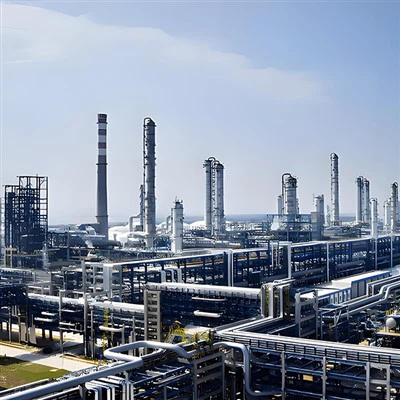
An oil refinery furnace heats crude oil and petroleum process streams to the temperatures required for distillation, conversion, and other refining operations. Choosing the right furnace affects fuel consumption, production stability, maintenance costs, and plant safety.
For refinery owners and EPC contractors, selecting a furnace is not simply about heating capacity. The equipment must also handle the process fluid safely, maintain acceptable tube temperatures, and deliver reliable performance under changing operating conditions.
This guide explains how oil refinery furnaces work, compares different furnace types, examines critical engineering parameters, and provides practical advice for choosing a reliable manufacturer.

What Is an Oil Refinery Furnace?
An oil refinery furnace, also known as a refinery fired heater or petroleum process heater, is industrial equipment that uses heat-typically generated by fuel combustion-to raise the temperature of petroleum process streams.
Unlike a boiler, which is designed to generate steam or another specified vapor, a refinery process furnace primarily heats a process fluid for downstream refining operations.
Typical applications include crude oil distillation, vacuum distillation, hydroprocessing feed heating, and selected thermal processing operations.
A refinery furnace generally contains a radiant section, process coils, burners, refractory or insulation, and a flue-gas system. Many designs also include a convection section for recovering additional heat.
Its exact configuration depends on the process duty, operating pressure, fluid characteristics, fuel type, and plant requirements.
How Does an Oil Refinery Furnace Work?
A conventional fired heater transfers energy from fuel combustion to a process stream flowing through tubes.
The heating process typically involves four stages:
Fuel combustion: Burners mix fuel and combustion air under controlled conditions to release thermal energy.
Radiant heat transfer: Process tubes in the radiant section absorb heat primarily through thermal radiation.
Convection heat recovery: In heaters equipped with a convection section, additional heat is transferred from the flue gas to process coils or another specified stream.
Heated fluid discharge: The process fluid exits the heater at the required temperature and flows to downstream refinery equipment.
The engineering challenge is to achieve the required outlet temperature without exceeding acceptable tube-metal temperatures, process pressure drop, or combustion-system limits.
Comparison of common furnace configurations
|
Furnace Type |
Potential Advantages |
Main Considerations |
|---|---|---|
|
Vertical Cylindrical |
Compact arrangement for suitable services |
Coil geometry, burner clearance, maintenance access |
|
Box-Type |
Flexible coil and burner arrangements |
Footprint, structural design, installation |
|
Specialized Process Furnace |
Designed for process-specific thermal requirements |
Reaction behavior, operating conditions, specialized design |
Selection advice: Do not choose a furnace simply because one configuration is described as more efficient or less expensive. Compare the proposed designs under the same process duty, fuel conditions, operating range, and scope of supply.
Seven Critical Factors to Consider When Selecting an Oil Refinery Furnace
Factor 1: Required heat duty
Heat duty is the useful thermal energy the process stream must absorb per unit of time.
For a simplified single-phase heating case, it can be estimated using the process flow rate, specific heat capacity, and temperature rise.
For refinery streams involving vaporization or changing fluid properties, detailed enthalpy calculations are required.
A furnace should be evaluated at normal, minimum, maximum, and relevant design operating cases.
Factor 2: Process-fluid properties
The process fluid affects heat transfer, pressure drop, material selection, and fouling behavior.
Important properties include density, viscosity, composition, thermal conductivity, heat capacity, vaporization behavior, and thermal stability.
Heavy hydrocarbon streams may be particularly sensitive to local overheating and deposit formation.
Factor 3: Tube-metal temperature
The temperature of the process tube wall can be significantly higher than the bulk fluid temperature.
Excessive tube-metal temperature can contribute to material degradation, coking, or premature equipment failure.
Engineers should review both average and maximum predicted tube-metal temperatures under relevant operating conditions.
Factor 4: Burner and combustion design
Burner selection affects heat distribution, flame stability, emissions, and the ability to operate at reduced loads.
The burner system must be compatible with the available fuel, furnace geometry, combustion-air conditions, and required operating range.
Factor 5: Process pressure drop
The furnace coil must transfer sufficient heat without creating excessive hydraulic resistance.
Pressure drop depends on coil length, diameter, flow velocity, fluid properties, fittings, and possible phase changes.
The allowable pressure drop should be specified before finalizing the coil arrangement.
Factor 6: Energy efficiency
A furnace with suitable heat recovery may reduce fuel demand, but the achievable savings depend on the actual design and operating conditions.
Thermal efficiency should be compared on a consistent fuel-heating-value basis and under clearly defined operating conditions.
Factor 7: Maintenance and inspection
The furnace should provide practical access for burner maintenance, coil inspection, refractory checks, and cleaning where required.
A lower initial price may result in higher lifecycle costs if maintenance access is inadequate.

How Much Fuel Does an Oil Refinery Furnace Consume?
Fuel consumption depends primarily on useful process heat duty and overall furnace thermal efficiency.
A simplified relationship is:

Why small efficiency differences matter
Consider two hypothetical designs delivering the same 15 MW of useful process heat.
|
Item |
Design A |
Design B |
|---|---|---|
|
Useful Heat Duty |
15 MW |
15 MW |
|
Assumed Efficiency |
80% |
85% |
|
Fuel Heat Input |
18.75 MW |
17.65 MW |
|
Difference |
- |
About 1.10 MW less |
At 8,000 operating hours annually, the difference is approximately 8,824 MWh of fuel energy.
The financial benefit depends on actual fuel prices, operating conditions, equipment investment, and maintenance requirements.
The example shows why refinery furnace buyers should consider lifecycle cost rather than focusing only on purchase price.
How to Reduce Furnace Coking and Tube Overheating
Coking and overheating are important concerns in certain refinery furnace services, particularly when heating hydrocarbon streams susceptible to thermal degradation.
Coke deposits can reduce heat transfer, increase pressure drop, and contribute to higher tube-metal temperatures.
Common contributing factors
Excessive local heat flux
Inadequate process flow
Unfavorable flow distribution
High thermal exposure of the process fluid
Changes in feed composition
Operating conditions outside the intended design envelope
Practical prevention measures
Maintain appropriate process flow. The process-side flow conditions must remain within the design limits, including during reduced-throughput operation.
Monitor temperature trends. Where specified, tube-metal temperature monitoring and process temperature trends can help identify abnormal thermal conditions.
Control burner performance. Burner maldistribution or inappropriate flame behavior can create unfavorable local heating.
Review pressure-drop trends. Increasing pressure drop under comparable conditions may indicate developing deposits or restrictions.
Plan suitable inspection and cleaning. The appropriate cleaning or decoking strategy depends on the process fluid, equipment design, and operating experience.
A key engineering lesson is that increasing firing rate is not always the correct response when outlet temperature falls. The cause should be investigated before making adjustments that could increase tube temperatures.
How to Choose an Oil Refinery Furnace in 6 Steps
Step 1: Establish the process design basis
Prepare the required heat duty, fluid composition, flow rates, inlet and outlet temperatures, operating pressure, and allowable pressure drop.
Step 2: Select the furnace configuration
Evaluate cylindrical, box-type, or specialized arrangements based on process requirements, installation constraints, coil geometry, and maintenance needs.
Step 3: Review thermal and mechanical design
Check heat distribution, predicted tube-metal temperature, material suitability, thermal expansion, and the applicable mechanical requirements.
Step 4: Evaluate combustion and energy performance
Confirm the fuel specification, burner operating range, expected fuel consumption, heat recovery arrangement, and emissions requirements.
Step 5: Review inspection and project documentation
Specify the required quality-control plan, material documentation, inspection procedures, testing, drawings, and technical deliverables.
Step 6: Compare the total project scope
Ensure suppliers are quoting the same equipment scope, performance conditions, delivery responsibilities, and technical support requirements.
For EPC projects, battery limits and interfaces with piping, instrumentation, fuel systems, and structures should be clearly defined.
What Should Be Included in an Oil Refinery Furnace RFQ?
A complete RFQ reduces the risk of receiving technically incomparable quotations.
|
RFQ Item |
Information Required |
|---|---|
|
Process Service |
Application and process description |
|
Heat Duty |
Normal and design heat duty |
|
Process Flow |
Minimum, normal, and maximum flow rates |
|
Fluid Properties |
Composition and relevant physical properties |
|
Temperature |
Inlet and required outlet temperatures |
|
Pressure |
Operating and design pressures |
|
Pressure Drop |
Maximum allowable process-side pressure drop |
|
Fuel |
Type, composition, heating value, and supply conditions |
|
Emissions |
Applicable emission requirements |
|
Site Conditions |
Ambient conditions, plot space, installation constraints |
|
Standards |
Governing codes and project specifications |
|
Inspection |
Testing, inspection, and documentation requirements |
|
Project Scope |
Equipment supply, interfaces, and site support |
|
Schedule |
Delivery and project milestones |
For a replacement furnace, also provide existing equipment drawings, operating data, maintenance history, and any changes to process conditions.
How Much Does an Oil Refinery Furnace Cost?
There is no reliable universal price for a customized refinery furnace.
The cost depends on the engineering requirements and the complete scope of supply.
Major price factors include furnace capacity, design temperature and pressure, coil materials, furnace configuration, burners, convection equipment, instrumentation, structural components, refractory, inspection requirements, and transportation.
What buyers should compare
A meaningful comparison should cover the following:
Equipment purchase price and included scope
Installation and integration costs
Expected fuel consumption
Inspection and maintenance requirements
Delivery schedule
Technical documentation
Performance commitments
Site support and after-sales responsibilities
For international EPC projects, transportation dimensions, packaging, lifting requirements, and delivery terms can also affect the total project cost.
Procurement advice: Ask manufacturers to identify technical assumptions and exclusions in their quotations. Two furnaces with similar nominal duties may have significantly different scopes and operating characteristics.
How to Choose a Reliable Oil Refinery Furnace Manufacturer
A reliable oil refinery furnace manufacturer should be able to explain how the proposed design meets the process requirements.
Important evaluation criteria include engineering capability, customization, material selection, manufacturing quality, inspection procedures, documentation, and project coordination.
Why Consider Chunlei Chemical Machinery?
Chunlei Chemical Machinery provides industrial process equipment solutions for chemical, petrochemical, and refinery-related projects.
For customized oil refinery furnace requirements, technical discussions can begin with the process heat duty, fluid properties, operating conditions, fuel requirements, installation constraints, and applicable project specifications.
Depending on the agreed scope, project coordination may include equipment configuration, engineering review, material and manufacturing considerations, quality-control requirements, technical documentation, delivery coordination, and installation or commissioning support.
For EPC contractors and refinery owners, early engineering communication helps clarify equipment interfaces and reduce changes during manufacturing and installation.
The final design, performance criteria, inspection requirements, and scope of supply should be confirmed through approved project documents.
Frequently Asked Questions About Oil Refinery Furnaces
What is the difference between an oil refinery furnace and a fired heater?
In many refinery applications, the terms refer to the same general category of equipment. A fired heater uses combustion to heat process streams, while the term refinery furnace may also refer to specialized process furnaces used in particular refining operations.
Which furnace type is best for a refinery?
There is no universally best type. The selection depends on process duty, fluid characteristics, temperature, pressure, installation space, maintenance requirements, and economics.
What is the typical efficiency of an oil refinery furnace?
Efficiency varies with furnace design, heat recovery, combustion conditions, fuel properties, and operating load. Buyers should request a defined efficiency basis and performance conditions rather than relying on a generic industry percentage.
How can a refinery furnace reduce fuel consumption?
Potential improvements include suitable flue-gas heat recovery, proper combustion control, maintaining clean heat-transfer surfaces, and operating within the intended design range.
What causes refinery furnace tubes to fail?
Possible causes include overheating, corrosion, creep damage, erosion, thermal fatigue, and other service-specific degradation mechanisms. The actual failure mechanism should be established through appropriate inspection and engineering analysis.
Can an existing oil refinery furnace be upgraded?
Yes, upgrades may be feasible depending on the equipment condition, process requirements, available space, combustion system, and project constraints. A technical assessment is needed before selecting modifications.
What standards apply to refinery fired heaters?
API Standard 560 is an important reference for direct-fired heaters in general refinery service. Other standards and project requirements may apply to heater tubes, burners, instrumentation, materials, inspection, and specialized furnace applications.
What information should I provide for a customized furnace quotation?
Provide the required heat duty, process fluid composition, flow rates, inlet and outlet temperatures, operating and design pressures, fuel specifications, allowable pressure drop, site conditions, applicable standards, and required scope of supply.
Contact Chunlei Chemical Machinery to request a technical proposal for your oil refinery furnace project.