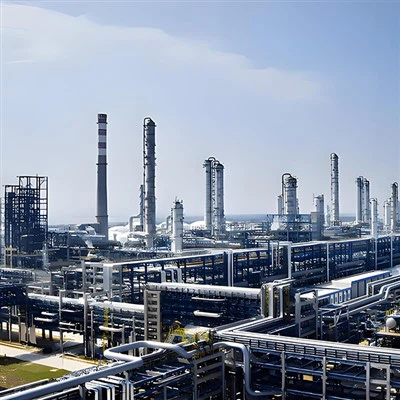
Zibo Chunlei Chemical Machinery Co., Ltd.: Your Professional Stainless Steel Reactor Manufacturer!
Founded in 2004, Zibo Chunlei Chemical Machinery Co., Ltd. is a project-oriented manufacturer specializing in petrochemical process equipment engineering and fabrication. Based in Zibo, China’s major petrochemical industrial hub, we support EPC contractors, engineering companies, and refinery owners with reliable manufacturing, technical coordination, and project execution services for refinery and chemical projects worldwide.
-
![SS316 Reactor]() SS316 ReactorChunlei-manufactured Stainless Steel SS316 Reactors support customized design in accordance with customers’ process requirements, covering volume, pressure, temperature, stirring type, heating method
SS316 ReactorChunlei-manufactured Stainless Steel SS316 Reactors support customized design in accordance with customers’ process requirements, covering volume, pressure, temperature, stirring type, heating method -
![Reactor Stainless Steel]() Reactor Stainless SteelA high-performance reactor stainless steel system designed for laboratory and industrial chemical processing. Built with corrosion-resistant materials, this stainless steel reactor ensures reliable
Reactor Stainless SteelA high-performance reactor stainless steel system designed for laboratory and industrial chemical processing. Built with corrosion-resistant materials, this stainless steel reactor ensures reliable -
![SS Reactor]() SS ReactorSS Reactor Global Projects Our stainless steel reactor systems are widely used in chemical processing, pharmaceutical manufacturing, biotechnology development, and food production industries. Each SS
SS ReactorSS Reactor Global Projects Our stainless steel reactor systems are widely used in chemical processing, pharmaceutical manufacturing, biotechnology development, and food production industries. Each SS -
![Stainless Steel Jacketed Reactor]() Stainless Steel Jacketed ReactorOur stainless steel jacketed reactor is designed for industries that require strict temperature control during chemical reactions. By combining corrosion-resistant stainless steel with an efficient
Stainless Steel Jacketed ReactorOur stainless steel jacketed reactor is designed for industries that require strict temperature control during chemical reactions. By combining corrosion-resistant stainless steel with an efficient


Why choose us?
Engineering-oriented project support
We work closely with EPC contractors and design institutes from the early project stage, supporting technical clarification, drawing review, material selection, and manufacturing feasibility evaluation. This helps reduce communication gaps, design risks, and execution delays during the project lifecycle.
Strong capability for custom equipment manufacturing
Chunlei specializes in non-standard and project-specific equipment, including fired heaters, heat exchangers, towers, pressure vessels, and column internals. Our manufacturing process is aligned with project specifications, technical requirements, and international engineering standards.
Stable quality control system
Quality control is implemented throughout the entire production process, from raw material traceability and welding management to dimensional inspection and final testing. Certified to ISO 9001, ISO 14001, and OHSAS 18001 standards, we focus on delivering reliable equipment for long-term plant operation.
Experience in international petrochemical projects
With equipment supplied to projects across Bangladesh, Uzbekistan, Myanmar, Nigeria, Russia, Tajikistan, and other countries, Chunlei understands the requirements of international EPC projects, including documentation control, inspection coordination, and schedule management.
Benefits of Stainless Steel Reactor
Unmatched corrosion resistance
The defining feature of stainless steel is its "passive" surface layer. A minimum of 10.5% chromium in the alloy reacts with oxygen to form a thin, inert, and self-healing layer of chromium oxide.
This passive film acts as a shield, preventing chemical reactions that would otherwise corrode the metal. This makes it highly resistant to water, steam, alkaline solutions, and many organic and inorganic compounds.
Superior mechanical strength and durability
Unlike glass or glass-lined steel, stainless steel is inherently strong and ductile. This mechanical robustness is critical for industrial safety and reliability.
It allows reactors to be designed for high-pressure or full-vacuum operations without risk of catastrophic failure. Furthermore, it is far more resistant to physical impact and thermal shock, reducing the risk of damage during operation or maintenance.
Excellent thermal performance
Process control often depends on precise temperature management. Stainless steel possesses high thermal conductivity, meaning it transfers heat efficiently.
This allows for rapid and uniform heating or cooling of the reactor contents via an external jacket, which is essential for controlling reaction kinetics, ensuring product quality, and maintaining safe operating conditions.
Purity and sterility
In the pharmaceutical and food and beverage industries, preventing contamination is paramount. The surface of high-grade stainless steel (like 316L) is extremely smooth and non-porous.
This lack of pores or cracks prevents microbial growth and makes the surface easy to clean and sterilize, a key requirement for Clean-in-Place (CIP) and Sterilize-in-Place (SIP) protocols. It does not leach components into the product, ensuring high purity.
Chemical manufacturing & processing
Reactors made of stainless steel do all the work in chemical making, from oxidation and crystallization to polymerization and distillation. They can stand up to high temperatures and pressures, as well as organic solvents and poisons that are not too strong. These reactors give you the strong, dependable performance you need, whether you are making unique chemicals or fine chemical intermediates.
Industri farmasi
For companies that make medicines, the quality of stainless-steel pharmaceutical tanks is a must. Active pharmaceutical ingredients (APIs), drug synthesis, and vaccine development can all be done in sterile settings inside stainless steel reactors. The best material for this job is Grade 316L with electro polished sides, which keeps it clean between batches and stops contamination. These vessels meet the strict rules of Good Manufacturing Practice (GMP) that your quality standards require.


Food and beverage processing
In the food business, stainless steel reactors are used to make everything from beer to dairy products and sauces. Their smooth surfaces meet strict hygiene standards, and the fact that they do not react with anything means that no flavor or color will transfer to your goods. Because they are clean-in-place (CIP) compatible, they are perfect for places that need to clean up a lot between production runs.
Petrochemical & refining industry
For tough jobs like pyrolysis, polymerization, and catalytic breaking, the petrochemical industry uses reactors made of stainless steel. In these conditions, you need materials that can keep their shape in harsh conditions like high temperatures and high pressures while also not corroding when exposed to strong fuels. For these tough jobs, higher-grade metals and duplex stainless steels are often the best choices.
Biotechnology and bioprocessing
In biotechnological uses, stainless steel reactors help grow cells, ferment substances, and make biological products. While controlling the surroundings precisely, these systems keep the sterile conditions that living things need. More and more, modern facilities are combining these reactors with high-tech automation systems to make output consistent and scalable.
Packaging and Shipping
Reinforced packaging in accordance with international EPC project standards, suitable for sea freight, multiple lifting operations, and long-term storage. Complete inspection documents and quality assurance information are provided with the shipment.

FAQ
We're well-known as one of the leading stainless steel reactor manufacturers and suppliers in China. Please feel free to buy high quality stainless steel reactor at competitive price from our factory. If you have any enquiry about customized service, please feel free to email us.
Popular Products