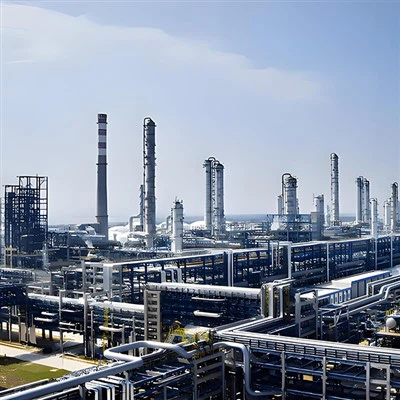
Crude Heater Heat Transfer Zones
Understanding the heat transfer zones in a crude heater is essential for efficient operation and longevity. These zones include the radiant section and firebox, where most heat transfer occurs through radiation and direct contact with combustion gases. This is followed by the convection section, which recovers waste heat from flue gases to maximize thermal efficiency. The shield or shock section acts as a transition zone, protecting downstream components from high temperatures and thermal stress.
When designing or selecting a crude heater, the coil layout plays a crucial role. Vertical cylindrical coils are compact and space-efficient, ideal for limited plot space and high-duty refinery trains. In contrast, box heater coils offer easier maintenance and better heat distribution, suitable for large-capacity applications. Both configurations must be optimized for heat flux distribution and thermal performance to ensure reliable, safe, and cost-effective operation.

Tube Coking and Hot Spots
In a Crude Heater, I watch fluid film temperature closely. Once the film at the tube wall gets too hot, heavy components start to break down and form coke. As that deposit builds, Tube Metal Temperature (TMT) climbs, and the risk gets worse in heavy crude service.
What Causes Hot Spots
-
- Heat flux distribution is not always even, so one part of the coil can run hotter than the rest.
- Burner imbalance, fouling, or low flow can create localized hot spots fast.
- A hot spot speeds up coking and cuts into run time.
Why Flow Matters
-
- Higher process velocity helps sweep the tube wall and slow deposit buildup.
- Longer residence time gives the fluid more time to overheat and crack.
- I treat coking risk as a simple balance: temperature, flow, and stable firing control.
My Control Focus
-
- Track tube skin and outlet trends before deposits grow.
- Keep firing steady to avoid sudden thermal spikes.
- Use tube coking mitigation early, before fouling turns into an unplanned shutdown.
API 560 and ASME Compliance for Crude Heaters
Ensuring your crude heater meets industry standards is crucial for safety and reliability. Our designs strictly follow API 560 guidelines, which set the rules for safe and efficient refinery fired heaters. This includes proper heat transfer, combustion control, and safety measures tailored for crude processing.
We also adhere to ASME Section VIII Div 1 and Div 2, covering pressure vessel design to ensure your heater can withstand operational stresses. This compliance guarantees the equipment's structural integrity and safety under high pressure.
Key safety features include: - Draft control to maintain proper combustion and prevent flame instability - Flame scanners for real-time flame detection and safety shut-offs - Negative firebox pressure to prevent leaks and ensure safe operation
Our Burner Management System (BMS) incorporates these safety requirements, providing automated control and safeguarding your personnel and equipment.
Standards like API RP 556 and NFPA 86 guide safe operation, including operating safeguards and emergency protocols. Following these ensures your crude heater runs efficiently while minimizing risks.
| Standard | Focus | Benefit |
|---|---|---|
| API 560 | Heater design & operation | Safe, efficient refinery heaters |
| ASME VIII Div 1 & 2 | Pressure vessel safety | Structural integrity under high pressure |
| API RP 556 | Burner safety | Safe combustion control |
| NFPA 86 | Fire safety & operation | Emergency readiness |
Choosing a crude heater designed with these standards in mind helps you meet global safety requirements and optimize your refinery's performance.
Materials for Harsh Crude Service
Choosing the right materials for crude heater components is critical, especially when dealing with heavy, high-sulfur, or naphthenic crude feeds. These environments are tough, causing corrosion and metal degradation if not properly managed.
Chromium-molybdenum steels are ideal for radiant coils because they offer excellent strength and resistance to high-temperature oxidation. These steels help maintain coil integrity under extreme heat and corrosive conditions.
Austenitic stainless steels are used for their superior high-temperature oxidation resistance. They are especially effective in preventing scaling and corrosion when exposed to aggressive crude oils.
Protection against sulfidation and naphthenic acid corrosion is essential. These corrosive agents can cause rapid material degradation, leading to costly downtime. Selecting alloys with high resistance to these conditions extends the service life of your heater.
For high-sulfur and heavy crude feeds, alloy selection becomes even more crucial. Specialized alloys with enhanced corrosion resistance and mechanical stability ensure reliable operation, reduce maintenance needs, and improve overall efficiency.
Using the right materials tailored for harsh crude service helps ensure your crude heater operates safely, efficiently, and with minimal downtime.
Custom Crude Heater Fabrication
We build each Crude Heater around project needs, with a direct factory supply model that keeps the process practical for global buyers. I focus on clean fabrication, steady quality, and cost control from the first build step to final shipment.
Quality Control
-
- Build to spec: Custom fabrication based on your operating needs and layout.
- Weld quality: Careful weld checks to help protect integrity and pressure retention.
- Thermal control: Fabrication attention that supports thermal expansion handling in service.
- Factory-direct delivery: Shipping from our factory to your site helps reduce extra handling and keeps costs in line.
Why It Matters
-
- Better fit for refinery and industrial use
- More consistent production quality
- Smoother delivery planning
- Strong value for competitive B2B sourcing
Crude Heater Configuration Comparison
I look at crude heater configuration the same way most buyers do: by footprint, duty, maintenance, and total project cost. The right layout depends on the process, plot space, and how hard the heater has to work.
Vertical vs. Horizontal
| Option | Best Fit | Main Benefit | Main Trade-Off |
|---|---|---|---|
| Vertical cylindrical heater | Tight plot space, compact sites | Smaller footprint | Less flexible layout |
| Horizontal box heater | High-duty refinery trains | Easier access for service | Needs more space |
| Thermal fluid circulator setup | Upstream and pipeline heating | Stable heat delivery | Depends on loop design |
What I Focus On
-
- Plot space: Vertical cylindrical crude heater designs save space and work well where the site is crowded.
- Duty level: Horizontal box heaters fit heavy refinery service and larger process trains.
- Maintenance: I favor layouts that make tube inspection, burner access, and cleaning simpler.
- CAPEX: A compact design can cut civil work and installation cost, but the best choice still depends on process needs.
- Factory supply: I build around the application, so the heater matches the job instead of forcing the job to fit a fixed design.
Practical Use
-
- Vertical cylindrical heaters: good for compact refinery areas and simpler layouts.
- Horizontal box heaters: better for high-throughput crude oil heating and wider maintenance access.
- Thermal fluid circulators: useful when steady heat transfer is needed for upstream systems or pipeline heating.
Simple Decision Rule
-
- Choose vertical when footprint matters most.
- Choose horizontal when duty and maintenance access matter more.
- Choose thermal fluid circulation when the process needs even heating and stable flow control.
For a crude heater project, I keep the comparison practical: capacity, footprint, uptime, and cost all have to line up before the design makes sense.

Crude Heater Maintenance and Decoking
Keeping your crude heater running smoothly means regular maintenance and effective decoking. Fouling and coke buildup are common issues that can cause uneven heat transfer, tube failures, and costly shutdowns.
Pigging and Decoking Methods for Tube Cleaning
-
- Pigging is a proven method for cleaning heater tubes without shutting down the entire unit. It involves pushing a cleaning device (pig) through the tubes to remove deposits.
- Decoking can be done offline using specialized tools or chemical treatments. This reduces downtime and prevents coke buildup from affecting heater performance.
Steam-Air Decoking and Offline Maintenance Planning
-
- Steam-air decoking is a safe, efficient way to remove coke deposits. It involves introducing steam and air to burn off coke in a controlled environment.
- Proper offline maintenance planning ensures decoking is scheduled before fouling impacts heat transfer or causes tube damage, keeping uptime high.
Tube Replacement, Inspection, and Uptime Protection
-
- Regular inspection intervals are vital. Use non-destructive testing like ultrasonic or radiographic methods to check tube integrity.
- Tube replacement should be planned based on inspection results to prevent leaks or failures.
- Focus on uptime protection by maintaining a strict schedule for cleaning, inspection, and timely tube replacement.
Reducing Fouling Before Shutdowns
-
- Implement fouling prevention strategies such as optimizing flow rates, controlling process velocities, and maintaining proper heat flux distribution.
- Use chemical treatments or coatings to minimize coke formation.
- Regular monitoring of fluid film temperature and heat transfer conditions can help catch early signs of fouling before shutdowns become necessary.
Consistent maintenance and strategic decoking are key to extending your crude heater's life, ensuring safe operation, and avoiding costly outages.
Crude Heater FAQ
| FAQ Topic | Key Point |
|---|---|
| Heater role | Preheats crude, improves efficiency |
| Coking causes | High TMT, uneven heat flux, heavy crude |
| Design choice | Space, capacity, maintenance needs |
| Standards | API 560, ASME VIII, BMS, NFPA 86 |
| Material choice | Cr-Mo steels, stainless steels, corrosion alloys |
| BMS benefit | Safety automation, risk reduction |