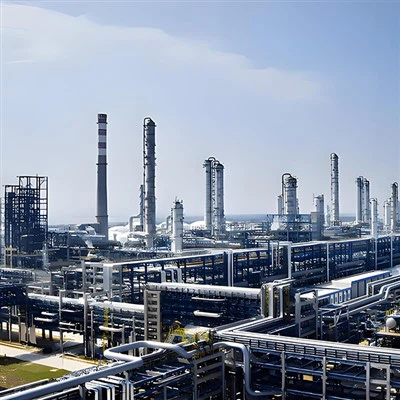
A refinery fired heater is one of the most important thermal equipment units in a refinery. It provides the heat required to bring crude oil, hydrocarbon feed, process gas, or other process streams to the temperature required by downstream equipment.
But choosing a fired heater is not simply a matter of matching a heating capacity with a process temperature.
The real engineering challenge is to deliver the required heat duty while controlling tube skin temperature, heat flux, fuel consumption, coking, pressure drop, combustion stability, and long-term reliability.
This guide explains the key factors engineers and purchasing teams should consider before selecting a Refinery Fired Heater.

What Is a Refinery Fired Heater?
A Refinery Fired Heater is a direct-fired process heating system. Fuel is burned in burners, and the resulting high-temperature gases transfer heat to process fluid flowing through tubes inside the furnace.
The basic heat-transfer process is:
Fuel → Combustion → Radiant Heat + Convection Heat → Process Tubes → Heated Process Fluid
Common fuel options include:
- Natural gas
- Refinery fuel gas
- Fuel oil
- Dual fuel
The actual fuel selection depends on the refinery's available utilities, fuel composition, emissions requirements, and operating conditions.
Refinery fired heaters are commonly used for:
- Crude oil heating
- Vacuum distillation
- Hydrocarbon feed heating
- Process gas heating
- Reboiler service
- Reactor feed preheating
Other high-temperature refinery processes
How Does a Refinery Fired Heater Work?
A typical fired heater contains several interconnected systems.
Burner System
The burner mixes fuel with combustion air and creates the required flame pattern.
Radiant Section
The process tubes receive intense radiant heat from the flame and hot refractory surfaces.
Convection Section
Hot flue gas leaving the radiant section passes through convection tubes, allowing additional heat to be recovered.
Stack and Draft System
The stack removes flue gas and works with the draft system to maintain the required furnace pressure and gas flow.
Refractory and Insulation
Refractory protects the furnace structure and limits heat loss.
These components cannot be designed independently. Burner position affects heat distribution; heat distribution affects tube temperature; tube temperature affects coking and tube life.
Start With Process Conditions
The first step in selecting a refinery fired heater is to define the process.
A supplier should normally receive information such as:
- Process fluid
- Flow rate
- Fluid composition
- Inlet temperature
- Outlet temperature
- Operating pressure
- Design pressure
- Required heat duty
- Vapor fraction
- Density
- Specific heat
- Viscosity
- Fouling tendency
A statement such as "I need a 20 MW heater" is not enough to complete a reliable design.
Two 20 MW heaters can have completely different designs if one heats a relatively clean hydrocarbon stream and the other handles a heavy, coke-forming oil.
Process data should determine the heater design, not the other way around.
Calculate the Required Heat Duty
Heat duty is the starting point for thermal sizing.
For simple sensible heating:
Q = m × Cp × ΔT
Where:
Q = heat duty
m = process mass flow rate
Cp = specific heat
ΔT = temperature increase
However, actual refinery services can involve vaporization, changing fluid properties, multiple components, and phase changes.
The final duty should therefore be determined through a complete process heat balance.
When requesting a quotation, provide the process flow rate and inlet/outlet conditions whenever possible.
Heat Flux Is More Important Than Furnace Size Alone
A common mistake in heater selection is focusing too much on furnace capacity.
A large heat-transfer area does not automatically mean better performance, and a compact heater is not necessarily more efficient.
Heat flux determines how much heat is transferred through a given area of the heating surface.
Excessive local heat flux can increase tube metal temperature and create problems such as:
- Accelerated coking
- Tube overheating
- Thermal stress
- Metallurgical damage
- Reduced tube service life
This is especially important for heavy hydrocarbon services.
The objective should be controlled and reasonably uniform heat distribution, rather than simply maximizing heat flux.
Tube Skin Temperature Must Be Controlled
Process fluid temperature and tube skin temperature are different.
The outside surface of the process tube is exposed to high-temperature radiation, while the inside surface transfers heat to the process fluid.
Tube skin temperature is affected by:
- Heat flux
- Process temperature
- Flow velocity
- Tube material
- Fouling
- Burner arrangement
- Flame pattern
For high-temperature refinery service, tube skin temperature can become one of the most important operating limits.
A heater may achieve the required outlet temperature while still creating excessive tube-wall temperature.
Therefore, the better engineering question is not:
"Can the heater reach the required outlet temperature?"
It is:
"Can it reach that temperature while maintaining acceptable tube metal temperature?"
Understand the Radiant Section
The radiant section is where a large portion of the heat is transferred directly from the combustion zone to the process tubes.
Important design parameters include:
- Burner arrangement
- Flame length
- Tube spacing
- Tube layout
- Heat flux
- Tube skin temperature
- Refractory design
- Poor burner positioning can create localized hot spots.
Flame impingement on process tubes should also be avoided unless specifically permitted by the design.
For this reason, burner and tube layouts need to be evaluated together rather than separately.
Do Not Underestimate the Convection Section
Flue gas leaving the radiant section still contains a large amount of usable thermal energy.
The convection section recovers part of this energy before the gas reaches the stack.
Depending on the project, recovered heat may be used for:
- Process preheating
- Steam generation
- Boiler feedwater heating
- Combustion-air preheating
A properly designed convection section can reduce fuel consumption and improve overall heater efficiency.
For a refinery operating thousands of hours per year, even a relatively small efficiency improvement can have a meaningful effect on operating costs.
Choose the Right Furnace Configuration
There is no single furnace configuration suitable for every refinery application.
Vertical Cylindrical Fired Heater
A vertical cylindrical heater offers a relatively compact arrangement and can be suitable for many moderate-duty applications.
It may be attractive where plot space is limited and a straightforward furnace arrangement is preferred.
Cabin-Type Fired Heater
Cabin-type heaters provide a larger rectangular radiant chamber and allow greater flexibility in tube and burner arrangement.
They can be considered for larger or more complex process duties.
Box-Type Fired Heater
Box-type designs provide greater flexibility for large heating surfaces and complicated process configurations.
The final configuration should be determined from:
Heat Duty + Process Conditions + Tube Arrangement + Burner Layout + Plot Space + Maintenance Requirements
rather than selecting a furnace shape simply because it is commonly used.
Select Process Tube Materials Based on Actual Service
Process tubes are critical pressure-containing components.
Material selection should consider:
- Design temperature
- Design pressure
- Process composition
- Sulfur content
- Hydrogen exposure
- Corrosion
- Coking tendency
- Long-term tube metal temperature
Depending on the service, materials may include:
- Carbon steel
- Low-alloy steel
- Stainless steel
- High-alloy steel
- Heat-resistant alloys
For high-temperature applications, selecting a tube material based only on initial purchase cost can create a much larger lifecycle cost later.
Burner Selection Affects the Entire Furnace
The burner is responsible for converting fuel into controlled thermal energy.
A suitable burner should provide:
- Stable combustion
- Appropriate flame shape
- Good fuel-air mixing
- Uniform heat release
- Low risk of flame impingement
- Required emissions performance
- Fuel composition also matters.
Refinery fuel gas can contain different proportions of hydrogen, methane, ethane, propane, and other components.
Changes in fuel composition can affect:
- Heating value
- Flame characteristics
- Combustion stability
- Air requirements
Therefore, burner selection should be based on the actual fuel specification rather than a generic fuel name.

Control Combustion Air
Combustion requires sufficient air, but excessive air increases heat loss.
When too much air enters the furnace, additional nitrogen and oxygen must also be heated before leaving through the stack.
This increases stack losses.
Insufficient combustion air can cause:
- Incomplete combustion
- Higher CO
- Flame instability
- Soot
- Unsafe operating conditions
The goal is controlled combustion with an appropriate air-to-fuel ratio.
Combustion control should be considered together with burner design, draft, fuel pressure, and instrumentation.
Natural Draft vs. Forced Draft
Draft controls the movement of combustion air and flue gas.
Natural Draft
Uses the density difference between hot flue gas and ambient air.
Advantages include:
Simple configuration
Low auxiliary power
Fewer rotating components
Forced Draft
Fans supply combustion air to the burners.
This provides greater control over combustion-air flow.
Balanced Draft
A combination of forced-draft and induced-draft equipment can provide more precise control of furnace pressure and flue-gas movement.
The appropriate system depends on heater size, fuel, emissions requirements, site conditions, and project specifications.
How to Reduce Coking in Refinery Fired Heaters
Coking is a major concern when heating heavy hydrocarbon streams.
As coke accumulates inside process tubes, thermal resistance increases.
The operating cycle can become:
Coking → Lower Heat Transfer → Higher Tube Skin Temperature → More Coking
Eventually this can lead to:
- Increased pressure drop
- Higher fuel consumption
- Lower heater capacity
- Shorter operating cycles
- More frequent decoking
- Tube damage
Coking control should therefore begin with the heater design.
Important factors include:
- Heat flux
- Tube-wall temperature
- Process velocity
- Tube diameter
- Tube length
- Residence time
- Process composition
- Operating temperature
Simply increasing firing intensity is often not the correct solution when process-side fouling is the problem.
Pressure Drop Also Affects Heater Selection
Process fluid must pass through the heater tubes within an acceptable pressure-drop range.
Pressure drop is influenced by:
- Tube diameter
- Tube length
- Number of passes
- Flow velocity
- Fluid viscosity
- Fluid density
- Operating temperature
Excessive pressure drop can increase pumping requirements and affect upstream process equipment.
For some thermally sensitive or high-viscosity services, hydraulic design becomes especially important.
The goal is to achieve adequate heat transfer without creating unnecessary resistance.
Consider Thermal Expansion
A refinery fired heater operates at high temperature, so thermal expansion is unavoidable.
Components that may experience thermal movement include:
- Process tubes
- Headers
- Tube supports
- Furnace structure
- Piping
- Stack
- Burner components
If thermal movement is not properly accommodated, excessive stress may develop.
Potential consequences include:
- Tube stress
- Header stress
- Piping loads
- Support damage
- Refractory cracking
Thermal expansion should be addressed during mechanical design and not left entirely to site installation.
Refractory and Insulation Affect Efficiency
Refractory protects the furnace structure from high temperatures while reducing heat loss.
Poor refractory performance may result in:
- Increased radiation losses
- Higher external wall temperatures
- Structural damage
- Higher fuel consumption
- Increased maintenance
The refractory system should be selected according to operating temperature and furnace conditions.
Installation quality is equally important. Cracks, gaps, poor anchoring, or improper curing can reduce refractory service life.
What Safety Systems Does a Refinery Fired Heater Need?
A fired heater combines flammable fuel, high-temperature combustion, and pressurized process fluid.
Depending on the project, safety and control systems may include:
- Burner Management System
- Flame Detection
- Fuel Shutoff Valves
- Furnace Pressure Monitoring
- Combustion-Air Monitoring
- Emergency Shutdown
- Purging Sequence
- Fuel Pressure Protection
- High/Low Temperature Alarms
- Safety Interlocks
The exact safety philosophy should be established according to the applicable codes, project specifications, and process safety requirements.
What Standards Apply to Refinery Fired Heaters?
For refinery applications, the project may reference standards and recommended practices such as:
API 560 – Fired Heaters for General Refinery Service
API 535 – Burners for Fired Heaters in General Refinery Services
Applicable ASME requirements
Applicable NFPA requirements
Local pressure equipment regulations
Environmental and emissions regulations
The exact standards and editions should be confirmed during the engineering stage.
A qualified manufacturer should be able to work from the customer's specified design basis and applicable codes.
How to Choose a Refinery Fired Heater Manufacturer
Price is important, but it should not be the first and only selection criterion.
Before choosing a Refinery Fired Heater manufacturer, ask the supplier whether it can handle the complete technical chain.
Thermal Engineering
Can the manufacturer perform:
Heat balance
Radiant-section calculation
Convection-section calculation
Heat-flux evaluation
Tube skin temperature evaluation
Mechanical Engineering
Can it design:
Process tubes
Headers
Tube supports
Furnace structure
Stack
Expansion system
Pressure-containing components
Combustion Engineering
Can it provide engineering for:
Burners
Fuel system
Combustion air
Draft system
Flame monitoring
Project Support
Can it provide:
Engineering drawings
Inspection documents
Manufacturing
NDT
Testing
Installation support
Commissioning assistance
These capabilities become particularly important when the heater is part of a refinery expansion or complete process unit.
Refinery Fired Heater Manufacturer - Chunlei Chemical Machinery
Chunlei Chemical Machinery provides customized fired-heater solutions for refinery, petrochemical, and chemical process applications.
The company focuses on developing the heater around the customer's actual process requirements instead of forcing every project into a fixed equipment configuration.
Depending on the project, the design can address:
- Process heat duty
- Process flow rate
- Furnace configuration
- Radiant section
- Convection section
- Process tube arrangement
- Tube materials
- Burner system
- Fuel conditions
- Combustion-air system
- Draft system
- Refractory
- Stack
- Instrumentation
- Safety and control requirements
For customers that only need a single heater, Chunlei Chemical Machinery can provide equipment-focused engineering and manufacturing.
For larger refinery and petrochemical projects, the service can extend beyond individual equipment:
Engineering → Equipment Manufacturing → Inspection → Delivery → Installation Support → Commissioning → EPC Services
This allows the fired heater to be coordinated with related process equipment and the overall project rather than treated as an isolated package.
How Much Does a Refinery Fired Heater Cost?
There is no fixed market price for a Refinery Fired Heater because the equipment is highly customized.
The final price can be affected by:
- Heat duty
- Furnace size
- Process tube quantity
- Tube material
- Radiant-section design
- Convection-section requirements
- Burner type and quantity
- Fuel system
- Refractory
- Instrumentation
- Automation
- Inspection requirements
- Applicable codes
- Emission requirements
- Installation scope
- EPC requirements
For example, a standard heater using relatively conventional materials can have a very different cost from a high-temperature refinery heater requiring alloy tubes, specialized burners, extensive NDT, customized instrumentation, and EPC support.
When comparing quotations, compare the complete technical scope, not just the equipment price.
What Information Is Needed for a Refinery Fired Heater Quotation?
For a preliminary technical proposal, prepare the following information if available.
Process Information
Process fluid
Flow rate
Composition
Inlet temperature
Outlet temperature
Operating pressure
Design pressure
Required heat duty
Vapor fraction
Fuel Information
Fuel type
Fuel composition
Fuel pressure
Heating value
Dual-fuel requirement
Site Information
Ambient temperature
Elevation
Available installation space
Utility conditions
Stack requirements
Project Information
Applicable design codes
Emission requirements
Inspection requirements
Control requirements
Delivery schedule
Installation requirements
Commissioning scope
EPC requirements
If some parameters are not available, provide the information you already have. The manufacturer can identify the missing engineering inputs during the technical clarification stage.
Refinery Fired Heater Quality Control
A reliable heater should be controlled throughout the manufacturing process, not inspected only after fabrication.
Important quality-control stages may include:
Raw Material Verification
Confirm material grade, certification, and traceability for process tubes and pressure-containing components.
Welding Control
Welding procedures, qualified welders, consumables, and inspection should comply with the project requirements.
Dimensional Inspection
Important checks can include:
Furnace dimensions
Tube positioning
Burner locations
Header alignment
Nozzle orientation
Structural dimensions
Non-Destructive Testing
Depending on the project, inspection may include:
RT
UT
MT
PT
Pressure Testing
Applicable pressure-containing components should be tested according to the relevant design code and project requirements.
Final Inspection
The completed equipment should be checked against approved drawings, specifications, inspection plans, and customer requirements before shipment.
Common Refinery Fired Heater Problems
High Tube Skin Temperature
Possible causes:
Excessive heat flux
Poor process flow
Fouling
Flame impingement
Incorrect burner adjustment
Continuous high tube temperature should be investigated because it can reduce tube service life.
Excessive Coking
Possible causes:
High tube-wall temperature
Low process velocity
Excessive heat flux
Heavy hydrocarbon composition
Excessive residence time
High Stack Temperature
Possible causes:
Poor convection heat recovery
Excessive combustion air
Fouled convection surfaces
Air leakage
Flame Instability
Possible causes:
Fuel pressure fluctuation
Incorrect air/fuel ratio
Unsuitable burner selection
Fuel composition changes
Refractory Damage
Possible causes:
Thermal cycling
Poor installation
Mechanical damage
Localized overheating
Refinery Fired Heater Purchasing Checklist
Before placing an order, confirm:
Heat duty
Process flow rate
Process composition
Inlet and outlet temperature
Operating and design pressure
Fuel type and composition
Furnace configuration
Radiant section
Convection section
Process tube material
Heat-flux requirements
Burner configuration
Draft system
Refractory
Stack
Instrumentation
Safety system
Emission requirements
Applicable codes
Inspection requirements
Installation support
Commissioning requirements
EPC scope
Final Thoughts
Selecting a Refinery Fired Heater is not simply about finding equipment with enough heating capacity.
The real objective is to provide the required process duty while maintaining controlled heat flux, tube skin temperature, combustion, pressure drop, fuel consumption, and long-term reliability.
A heater that reaches the required outlet temperature but causes rapid coking or excessive tube temperature is not a good solution.
Likewise, a low initial equipment price does not necessarily mean a low total cost if the heater consumes more fuel, requires frequent maintenance, or reduces process availability.
For this reason, refinery buyers should evaluate the complete engineering and supply capability:
Process Design → Thermal Design → Mechanical Design → Combustion → Manufacturing → Inspection → Installation → Commissioning → Technical Support
For individual equipment orders or larger refinery and petrochemical projects, Chunlei Chemical Machinery can provide customized Refinery Fired Heater solutions and support suitable EPC requirements.
The right heater should be designed around the actual process-not simply around a heating capacity or a quotation.