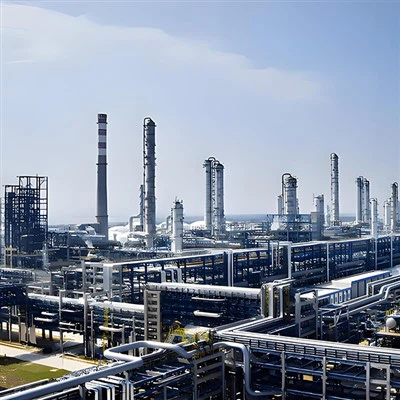
What Is a Process Heater for Petrochemical Industry?
A petrochemical process heater is a specialized industrial heating furnace designed to provide high-temperature heat loads required for refining and chemical processing. It ensures continuous, stable thermal energy transfer essential for critical operations such as distillation, reforming, and cracking.
In a plant heating system, the process heater plays a central role by directly heating process fluids-whether gases or liquids-through combustion or electrical means. These heaters are engineered to deliver precise temperature control, safety, and efficiency, supporting complex petrochemical workflows.
Unlike general industrial heaters or standard furnaces, petrochemical process heaters are custom-engineered to meet strict standards like API 560 and ASME. They incorporate advanced burner systems, refractory structures, and tailored metallurgy to withstand high pressures, corrosive environments, and continuous operation.
Petrochemical service demands specialized engineering because of the unique challenges involved: high temperatures, hazardous conditions, material compatibility, and emission standards. Custom design, rigorous quality control, and compliance with international standards are essential to ensure safety, reliability, and optimal performance in these demanding applications.
Main Types of Process Heaters for Petrochemical Industry
Choosing the right process heater depends on your plant's specific needs. Here are the main types used in petrochemical applications:
Fired Process Heaters and Direct-Fired Heating
These are the most common in petrochemical plants. They use petrochemical-grade burners to generate high-temperature heat directly inside the furnace. Fired heaters are ideal for large-duty, continuous operations where thermal efficiency and reliability are critical.
Electric Process Heaters
Electric heaters are used for applications requiring precise temperature control and low emissions. They are suitable for smaller or specialized processes, offering quick response and minimal environmental impact.
Crude Heaters
Designed for preheating feedstock before it enters distillation units, crude heaters improve overall refining efficiency. They handle high flow rates and operate reliably under harsh conditions.
Reboiler Heaters
Reboiler heaters support separation and distillation units by providing consistent heat to vaporize liquids. They are essential for maintaining proper separation and improving product quality.
Specialized Furnaces
- Reformer Furnaces: Support catalytic reforming for high-octane gasoline production.
- Cracking Furnaces: Enable hydrocarbon cracking in steam cracking units for olefin production.
- Hydrogenation Furnaces: Facilitate hydrogen addition processes to improve feedstock quality.
- Sulfur Recovery Unit (SRU) Furnaces: Optimize sulfur oxidation, ensuring safe and efficient sulfur recovery.
Each type is engineered for specific process demands, ensuring optimal thermal performance and operational safety in petrochemical environments.
Process heaters are essential in various petrochemical plant units, providing reliable thermal energy for critical operations. They are widely used in crude distillation units and vacuum distillation units to preheat feedstocks, optimizing separation processes. Catalytic reforming units rely on process heaters to generate the high temperatures needed for converting naphtha into high-octane reformates. In hydrocracking units, they supply precise heat for breaking down heavy hydrocarbons into lighter products. Steam cracking units depend on process heaters for high-temperature cracking of hydrocarbons to produce olefins like ethylene and propylene. Olefin production units utilize these heaters to ensure consistent heat transfer during olefin synthesis. Additionally, they support separation and reboiling systems and are vital in sulfur recovery systems to maintain efficient sulfur oxidation and recovery processes. These applications highlight the importance of customized, high-performance petrochemical process heaters for continuous, safe, and efficient plant operation.

Key Performance Needs
For a process heater for petrochemical industry, I treat these as non-negotiable:
-
- Stable temperature control - A fired process heater must hold a steady heat load so the unit runs consistently and product quality stays on target.
- High thermal efficiency - Good tube layout, burner design, and refractory structure help improve heat transfer efficiency and reduce fuel use.
- Safe operation in hazardous areas - A petrochemical furnace needs tight flame control, reliable combustion, and hardware suited for demanding plant conditions.
- Corrosion and coking resistance - Material selection matters in crude heater, reboiler heater, and cracking furnace service where fouling and aggressive media can shorten life.
- Long-term reliability - The heater has to perform in continuous service with minimal downtime, especially in refinery heating equipment and other high-duty units.
I design around these points from the start so the refinery process heater fits the process duty, the site limits, and the operating risk profile.
Design Factors That Matter
Selecting the right design elements is critical for a petrochemical process heater to operate efficiently and reliably. Key considerations include:
-
-
Tube Material Selection: The choice of tube material must match the operating temperature and corrosion environment. For high-temperature, corrosive, or coking conditions, materials like alloy steel or heat-resistant alloys are essential to prevent failure and ensure long-term durability.
-
-
Burner and Combustion System Design: A well-designed burner provides stable flame control, efficient fuel combustion, and low emissions. Custom combustion systems optimize heat transfer and reduce fuel waste, which is vital for cost-effective operation.
-
-
Refractory Structure and Insulation: Proper refractory lining and insulation minimize heat loss, protect structural components, and improve thermal efficiency. They also help maintain safe surface temperatures and reduce external heat exposure.
-
-
Tube Layout and Heat Distribution: Strategic tube arrangement ensures even heat transfer across the heater, preventing hot spots and uneven thermal stress. Custom tube layouts improve heat transfer efficiency and extend equipment life.
-
-
Footprint and Installation Constraints: Design must consider plant space, existing infrastructure, and installation logistics. Compact, adaptable layouts facilitate easier installation and integration into the plant's overall process flow.
-
Focusing on these design factors guarantees that fired heaters for petrochemical plants deliver stable, efficient, and safe operation under demanding process conditions.
Safety and Compliance
When I design a process heater for petrochemical industry, safety is not an add-on. It is part of the basic design from day one. A petrochemical process heater must handle high temperature, changing loads, and hazardous plant conditions without losing control.
Core Standards
| Area | What I follow |
|---|---|
| Heater design | API 560 for high-efficiency petrochemical furnaces |
| Materials and fabrication | ASME and ASTM requirements |
| Quality system | ISO 9001, ISO 14001, and OHSAS 18001 |
| Site safety | Hazardous area requirements and project rules |
| Verification | Inspection, NDT, and FAT |
What This Means in Practice
-
- API 560 heater design helps keep the fired heater structure, burner setup, and heat transfer approach aligned with petrochemical service.
- ASME and ASTM guide material choice and fabrication quality for a safer industrial heating furnace build.
- ISO quality systems support controlled production, traceability, and consistent output.
- Hazardous area heater work needs careful attention to plant conditions, layout, and operating risk.
- Final checks include NDT inspection and factory acceptance testing before shipment.
Quality Checks I Use
-
- Raw material traceability
- Welding procedure qualification
- Dimensional validation
- Non-destructive testing
- FAT before release
For me, compliance is not just paperwork. It is how I protect performance, reduce risk, and deliver a refinery heating equipment solution that is ready for real plant use.
Fired Heater vs Electric Heater
A process heater for petrochemical industry work is not one-size-fits-all. I usually compare the duty, emissions target, plant layout, and maintenance load before I choose a fired process heater or an electric process heater.
Best Fit
-
- Fired heaters fit better for:
- High-duty continuous service
- Refinery heating equipment
- CDU, VDU, cracking, reforming, and reboiling service
-
Projects that need stable high-temperature heat loads
-
-
Electric heaters fit better for:
- Process areas that need tight temperature control
- Sites with strong low-emission goals
- Smaller or more specialized heating duties
- Locations where fuel system design is limited
Quick Comparison
| Item | Fired Heater | Electric Heater |
|---|---|---|
| Operating cost | Often tied to fuel use | Often tied to power use |
| Emissions | Combustion-related emissions apply | No direct fuel combustion |
| Maintenance | Burner, refractory, and combustion checks matter | Fewer combustion parts, but electrical checks matter |
| Space fit | Needs room for burners, flue, and access | Can be easier to place in compact layouts |
| Process fit | Strong for refinery and petrochemical heat loads | Better for precise or specialized heating needs |
What I Check First
-
- Heat duty: Can the heater hold the required load without instability?
- Safety: Is the area classified as hazardous and does the design fit it?
- Process match: Does the service need direct flame heating or tighter control?
- Layout: Will the footprint work with the plant plot and lifting limits?
- Maintenance: Which option gives the cleaner service path over time?
My Rule of Thumb
For refinery process heater and industrial heating furnace service, I usually lean toward fired systems when the job needs robust, continuous thermal output. For tighter control or lower direct emissions, I review electric heating as a separate option, then match it to the process spec and site limits.
How to Choose a Process Heater for Petrochemical Industry
We start with the process, not the hardware. The right refinery process heater depends on the fluid, the duty, and the plant layout.
| What we check | Why it matters |
|---|---|
| Process fluid | Crude, vacuum service, reboiling, hydrogenation, reforming, cracking, or SRU duty all need different heater setups. |
| Flow, temperature, pressure | These set the heater size, heat load, and tube design. |
| Fouling and corrosion risk | Coking and corrosion affect tube material choice and maintenance needs. |
| Plant layout | Footprint, lifting path, and installation space shape the final design. |
| Project standard | API 560, ASME, ASTM, and client specs keep the unit compliant. |
What I verify
-
- Target outlet temperature and operating pressure
- Heat transfer efficiency needs
- Burner and combustion control needs
- Tube material for temperature and corrosion service
- Site constraints and hazardous area requirements
- Drawing review, fabrication feasibility, and project documentation
A good petrochemical process heater is matched to the duty, the unit, and the site conditions. That is how I keep the design practical, compliant, and ready for continuous service.
Our manufacturer offers comprehensive capabilities to support your process heater for the petrochemical industry, including custom design for non-standard projects. We provide early-stage engineering support to ensure optimal integration with your plant layout and process requirements. Our team reviews material selection and fabrication processes to guarantee durability and performance under high-temperature and corrosive conditions.
We enforce strict quality control and traceability throughout the manufacturing cycle, adhering to international standards like API 560, ASME, and ISO. This ensures each petrochemical process heater meets safety, reliability, and performance benchmarks. Additionally, we provide detailed documentation and export support for seamless project execution worldwide, giving you confidence in our ability to deliver reliable, high-quality refinery process heaters tailored to your specific needs.


Common Problems and How to Avoid Them in Process Heaters for Petrochemical Industry
Uneven heating and hot spots can lead to localized stress, tube failure, and reduced heat transfer efficiency. To prevent this, proper tube layout and uniform heat distribution are essential.
Excessive fuel consumption often results from poor burner tuning, incorrect refractory insulation, or inefficient combustion systems. Regular maintenance and optimized burner design help improve thermal performance and lower operating costs.
Tube fouling and coking are common issues caused by process residues, hydrocarbons, or impurities. Implementing effective cleaning schedules, using corrosion-resistant materials, and designing for easy access can minimize fouling and extend equipment life.
Burner instability leads to inconsistent flame and emissions, risking unsafe operation. Ensuring high-quality burners, proper combustion air supply, and stable fuel flow are critical for reliable operation.
Thermal stress and material failure occur when temperature gradients are too high or materials are not suited for operating conditions. Selecting appropriate tube materials and designing for thermal expansion help prevent cracks and failures.
Poor design fit, including misaligned components or inadequate footprint planning, causes downtime and costly repairs. Custom engineering that considers site constraints and process requirements ensures reliable, long-term operation.
Maintenance Tips
A process heater for petrochemical industry service needs steady upkeep to stay safe, efficient, and reliable.
-
- Inspect often: Check the burner, flame pattern, seals, supports, and visible hot spots.
- Watch the refractory: Look for cracks, spalling, insulation loss, and any sign of heat leakage.
- Monitor tubes: Track tube wall condition, scaling, corrosion, coking, and uneven temperature.
- Control fouling: Clean deposits before they reduce heat transfer efficiency or raise fuel use.
- Verify calibration: Test instruments, controls, alarms, and safety interlocks on a routine basis.
- Plan overhaul early: Schedule repair or replacement when performance drops, not after a failure.
For a fired process heater or refinery process heater, the goal is simple: keep combustion stable, protect the tube system, and stop small issues before they turn into shutdowns.
FAQ: Process Heater for Petrochemical Industry
| Question | Short answer |
|---|---|
| What is the difference between a process heater and a furnace? | I treat a process heater as the controlled heat source for a specific process stream. In petrochemical work, furnace is often used as the broader term for the same type of industrial heating furnace. |
| Which type is most common? | For refining service, the most common starts are crude heaters and refinery process heaters. Other unit needs may call for reboiler heaters, reformer furnaces, cracking furnaces, or SRU furnaces. |
| Is an electric process heater suitable for high-duty service? | For high-duty petrochemical use, I always check the heat load, operating limits, and site rules first. The project should decide the heater type, not the label. |
| What standards should it meet? | I build around API 560, ASME, and ASTM requirements, with quality control under ISO 9001, ISO 14001, and OHSAS 18001. |
| How do I choose the right material? | I match the tube and body materials to temperature, pressure, and corrosion risk. Common options include carbon steel, stainless steel, alloy steel, and heat-resistant materials. |
| Can it be customized for a specific plant layout? | Yes. I design around the site footprint, lifting logic, construction limits, and project deployment needs. |
| What is needed for a quotation or RFQ? | Send the process duty, fluid details, target temperature, pressure, layout data, standards, material needs, inspection scope, and delivery requirements. |

What I Check First
-
- Duty and service: refinery, reboiler, reforming, cracking, hydrogenation, or SRU use
- Operating conditions: temperature, pressure, and corrosion exposure
- Site fit: footprint, lifting path, and installation limits
- Compliance: API 560 heater, ASME, ASTM, and project specs
- Quality scope: traceability, NDT, and FAT requirements
Fast Rule
-
- Choose fired heating when the process needs stable, controllable high-temperature heat loads.
- Choose custom engineering when the plant has strict layout, material, or project constraints.
- Choose a verified build when long service life, inspection control, and export handling matter.