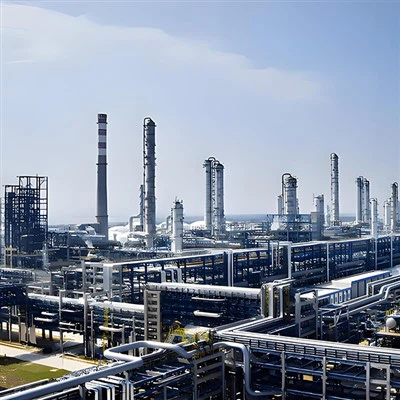
In heavy industrial processing, high-temperature heating systems are often grouped under the same category. Terms such as petrochemical furnace, refinery fired heater, process heater, and industrial furnace are frequently used interchangeably in engineering discussions. However, from an operational and design perspective, petrochemical furnaces and refinery fired heaters are developed for fundamentally different process objectives.
Understanding these differences is essential when planning new refinery capacity, upgrading petrochemical plants, or designing integrated EPC projects. Selecting the wrong heating system does not simply affect thermal efficiency-it can impact product yield, equipment lifetime, and operational safety.

Different Process Roles in Industrial Facilities
Refinery fired heaters are primarily designed to heat hydrocarbon streams before they enter separation units such as crude distillation columns, vacuum towers, or catalytic processing units. Their job is straightforward but demanding: raise the temperature of process fluids to precise levels before further chemical transformation occurs.
Petrochemical furnaces, on the other hand, are usually integrated directly into reaction systems. In many petrochemical units, the furnace is not just a heating device but a core part of the chemical conversion process. For example, cracking furnaces used in olefin production must sustain extremely high radiant temperatures while maintaining precise residence times inside reactor tubes.
Because of this difference, petrochemical furnaces often operate under tighter thermal control conditions and are designed around reaction kinetics rather than simple heat transfer.
Structural Design Differences
A refinery fired heater typically includes two main heat-transfer zones: the radiant section and the convection section. The radiant chamber provides the majority of heat through direct flame radiation, while the convection section recovers heat from flue gases to improve overall efficiency.
Petrochemical furnaces frequently require additional structural considerations. Reactor tubes may be arranged vertically or horizontally depending on reaction requirements, and the furnace must ensure extremely uniform heat distribution along the tube length. Even minor temperature deviations can alter product composition or cause carbon deposition.
For this reason, petrochemical furnaces often involve more advanced burner arrangements, tighter flame geometry control, and specialized refractory materials.
Operating Temperature and Thermal Load
Refinery heaters generally operate within a process temperature range between 300°C and 700°C depending on the unit. Their primary challenge is managing large hydrocarbon flow rates while avoiding tube overheating.
Petrochemical furnaces can exceed 900°C in certain cracking processes. At these temperatures, material selection becomes critical. Alloy tubes, refractory linings, and combustion control systems must withstand sustained high heat flux levels without degradation.
These higher temperatures explain why petrochemical furnace engineering is often more complex and more expensive than conventional refinery heaters.
Engineering Complexity and EPC Integration
From a project execution perspective, refinery heaters are often standardized designs adapted for different capacities. Many suppliers can manufacture heaters based on well-established configurations.
Petrochemical furnaces, however, frequently require deeper engineering integration. Their design must align with reaction kinetics, catalyst systems, feedstock composition, and downstream separation technology.
This is where EPC capabilities become important. An EPC contractor capable of integrating process engineering, furnace design, material selection, and installation management can significantly reduce project risks. When furnace engineering is separated from process design, performance mismatches often appear during commissioning.
Efficiency Considerations
Energy consumption represents one of the largest operating costs in both refinery and petrochemical plants. While refinery heaters focus on improving fuel efficiency through convection heat recovery and optimized combustion systems, petrochemical furnaces must balance efficiency with reaction control.
In some cracking processes, higher radiant intensity is necessary to maintain reaction conditions. As a result, maximizing efficiency is not always the primary objective; process stability and product yield take precedence.


Which System Is Right for Your Project?
The decision between a petrochemical furnace and a refinery fired heater depends entirely on the role of heat within the process. If heating is required to prepare feedstock for downstream separation or reaction units, refinery fired heaters are typically the correct solution. If heating is directly responsible for driving chemical conversion reactions, a specialized petrochemical furnace is necessary.
Understanding this distinction early in project planning can save millions in equipment redesign, plant retrofits, and operational inefficiencies.
Final Thoughts
In large industrial facilities, heating systems are more than auxiliary equipment-they are fundamental components of process performance. Petrochemical furnaces and refinery fired heaters may appear similar at first glance, but their design philosophies reflect very different process demands.
Companies planning refinery expansions or petrochemical investments should evaluate furnace selection carefully, considering both process requirements and long-term operational efficiency.
If your project requires a customized petrochemical furnace or a fully integrated EPC heating system solution, our engineering team can support the entire process-from thermal design and equipment manufacturing to installation and commissioning.
Contact us today to discuss how a properly engineered furnace system can improve efficiency, reliability, and long-term plant performance.