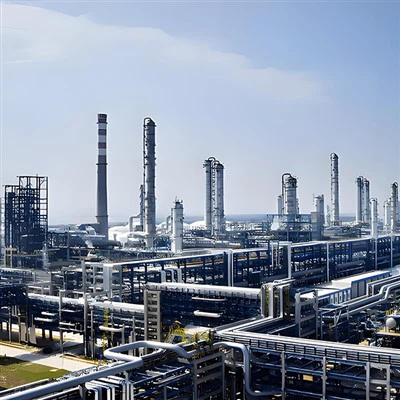
Exhaust gas from industrial furnaces, boilers, incineration systems, engines, and petrochemical processing equipment often carries a significant amount of thermal energy. When this heat is discharged without recovery, the plant loses an opportunity to reduce fuel consumption, improve overall energy efficiency, and lower operating costs.
An exhaust gas heat exchanger helps recover part of this energy by transferring heat from hot exhaust gas to another medium, such as combustion air, water, thermal oil, or a process stream. The recovered heat can then be reused elsewhere in the plant.
However, installing an exhaust gas heat exchanger does not automatically guarantee energy savings. The actual benefit depends on exhaust gas temperature, flow rate, gas composition, dust loading, corrosion potential, available heat sinks, and operating conditions. Poorly selected equipment may suffer from fouling, corrosion, excessive pressure drop, or frequent maintenance.
For petrochemical plants, refineries, industrial furnace operators, and EPC contractors, the challenge is to identify a heat recovery solution that delivers measurable energy benefits without creating new operational problems.
This guide explains how exhaust gas heat exchangers work, how to select the right configuration, what causes common performance problems, and how to evaluate a customized solution from an industrial heat exchanger manufacturer such as Chunlei Chemical Machinery.
What Is an Exhaust Gas Heat Exchanger?
An exhaust gas heat exchanger is equipment designed to recover heat from hot exhaust gas or flue gas and transfer it to another fluid or gas stream.
In most applications, the two streams remain physically separated by a heat-transfer surface. Heat passes through the exchanger wall without intentionally mixing the exhaust gas with the receiving medium.
Depending on the application, the recovered heat may be used to:
Preheat combustion air for industrial furnaces or boilers
Heat water for process or utility systems
Preheat process fluids before downstream equipment
Supply heat to thermal oil or other suitable heat-transfer systems
Recover energy from high-temperature industrial exhaust
Improve the overall energy balance of an industrial plant
The equipment is sometimes called a flue gas heat exchanger, exhaust gas waste heat recovery exchanger, or industrial waste heat exchanger. The terminology varies by industry and application.
One important distinction is that an exhaust gas heat exchanger is a type of heat recovery equipment, while waste heat recovery describes the broader process of capturing and reusing otherwise wasted energy.
The exchanger is only one part of the complete recovery system. Ductwork, fans, bypass arrangements, condensate management, controls, insulation, and the receiving heat-consuming system may also affect the final result.
Where Are Exhaust Gas Heat Exchangers Used?
The most suitable application is one where a sufficiently hot exhaust stream is available and there is a practical use for the recovered energy.
Petrochemical and refinery furnaces
Petrochemical and refinery fired heaters discharge hot flue gas after combustion heat has been transferred to the process. Depending on the furnace configuration, some of the remaining heat can be recovered to preheat combustion air or another suitable stream.
Potential benefits include lower fuel demand and improved overall thermal efficiency.
However, additional heat recovery must be evaluated against the furnace draft, burner operating range, flue gas composition, and the minimum permissible exhaust temperature.
Industrial boilers
Boiler exhaust gas can be used to preheat combustion air or feedwater through an appropriate heat recovery arrangement.
The achievable benefit depends on the boiler load profile, fuel type, existing economizer or air preheater, and the conditions under which the recovered heat can be used.
A retrofit project should evaluate the existing heat recovery system before adding another exchanger.
Chemical processing equipment
Chemical plants may have exhaust streams from thermal treatment, process heating, drying, or other production operations.
Recovered heat can potentially be reused in feed preheating, hot water production, or other plant processes.
The key issue is whether the exhaust gas and receiving process are compatible in terms of temperature, flow, contamination, operating schedule, and material requirements.
Waste incineration and thermal treatment
Exhaust gas from incineration and thermal treatment systems may contain substantial recoverable energy, but it can also carry dust, corrosive compounds, and other contaminants.
The exchanger design must account for particulate loading, deposit formation, corrosion mechanisms, cleaning access, and any required downstream gas treatment.
Engines, generators, and industrial combustion systems
Exhaust from engines and generators may be used to produce hot water, heat a process fluid, or support another thermal demand.
In these applications, exhaust temperature and flow can vary with engine load. The heat recovery system must accommodate the actual operating range and avoid excessive exhaust backpressure.
Application overview
| Industry or Equipment | Potential Heat Recovery Use | Key Design Concern |
|---|---|---|
| Petrochemical fired heaters | Combustion-air or process-stream preheating | Furnace draft, tube or duct integration, flue gas temperature |
| Industrial boilers | Air or feedwater preheating | Existing heat recovery equipment and corrosion limits |
| Chemical processing plants | Process heating or utility heating | Gas composition and process compatibility |
| Incineration systems | Water, air, or process heating | Dust, deposits, corrosion, cleaning |
| Engines and generators | Hot water or thermal recovery | Variable load and exhaust backpressure |
| Industrial dryers | Inlet air or process-air preheating | Dust, moisture, and temperature variation |
The most attractive application is not necessarily the one with the highest exhaust temperature. A lower-temperature stream with a stable flow and a nearby heat consumer may provide a more practical investment than a hotter stream with no useful destination for the recovered energy.
How Does an Exhaust Gas Heat Exchanger Work?
The operating principle is straightforward: hot exhaust gas releases heat through a heat-transfer surface, and the receiving medium absorbs that heat.
The engineering challenge lies in achieving sufficient heat transfer while controlling pressure drop, fouling, corrosion, and operating risk.
Characterize the exhaust gas
Before selecting equipment, establish the exhaust gas temperature, mass flow rate, composition, pressure, moisture content, dust loading, and expected variations during operation.
These parameters determine the available thermal energy and influence material selection, heat-transfer surface design, and maintenance requirements.
If the exhaust gas composition changes significantly with production conditions or fuel quality, the design should account for those variations.
Identify the receiving medium
The next step is to determine where the recovered heat will go.
Common receiving media include:
Combustion air
Water
Thermal oil
Process gas
A compatible liquid process stream
The receiving medium must be able to absorb the recovered heat at a useful temperature level.
For example, a high-temperature exhaust stream may be suitable for combustion-air preheating, while a lower-temperature stream may be more appropriate for water heating.
Calculate the recoverable heat
The theoretical heat available depends on the exhaust gas flow rate, specific heat capacity, and temperature reduction.
For a simplified sensible-heat calculation:
This equation provides an initial estimate. A detailed design must account for temperature-dependent properties, moisture and phase changes where relevant, heat losses, receiving-medium conditions, and the practical temperature limits of the system.
The key is to distinguish between theoretical available heat and the amount that can be recovered economically and safely.
Determine the exchanger configuration
The exchanger configuration depends on the required duty, temperature profile, gas cleanliness, receiving medium, pressure conditions, installation space, and maintenance strategy.
The selected design must provide sufficient heat-transfer surface without creating unacceptable pressure drop or an impractical cleaning burden.
Integrate the exchanger into the plant
The final step is to assess the complete system rather than the exchanger alone.
This includes ductwork, fans, supports, thermal expansion, insulation, bypass arrangements, instrumentation, controls, and the downstream use of recovered heat.
A technically sound exchanger can still deliver poor results if the overall system is not properly integrated.
What Types of Exhaust Gas Heat Exchangers Are Available?
Different exchanger configurations are suitable for different exhaust conditions. The selection should reflect the gas properties, required heat duty, pressure constraints, maintenance requirements, and available space.
Tubular exhaust gas heat exchanger
A tubular exchanger transfers heat through a bundle or arrangement of tubes. One stream passes through the tubes while the other flows around them, depending on the design.
Potential advantages include a familiar mechanical arrangement, adaptability to different process conditions, and the possibility of designing for specific pressure and temperature requirements.
The main design considerations include tube diameter, tube spacing, gas-side flow distribution, fouling, pressure drop, and cleaning access.
A tubular configuration may be suitable for a wide range of industrial heat recovery applications, but the detailed arrangement must match the actual exhaust conditions.
Shell-and-tube heat exchanger for exhaust gas service
A shell-and-tube heat exchanger may be considered when the process and gas-side conditions are compatible with its configuration.
However, gas-side heat transfer is often less favorable than liquid-side heat transfer. The design may therefore require a substantial heat-transfer surface and careful consideration of gas flow distribution and pressure drop.
The term "shell-and-tube" alone is not enough to establish suitability. Buyers should confirm which stream passes through the tubes, how the gas is distributed, how deposits will be removed, and how the exchanger will be maintained.
Finned-tube heat exchanger
Finned tubes increase the external surface area available for heat transfer. They may be useful when a gas stream has a relatively low heat-transfer coefficient and additional surface area is needed.
The trade-off is that fins can also collect dust or deposits, depending on their spacing and the gas characteristics.
Finned-tube arrangements should therefore be evaluated carefully for dirty or sticky exhaust gas. A design that maximizes surface area without considering fouling may lose performance quickly in service.
Combustion-air preheater
A combustion-air preheater uses hot flue gas to raise the temperature of incoming combustion air.
Preheated air can reduce the additional fuel needed to reach the required furnace duty. However, the achievable benefit depends on burner compatibility, furnace configuration, air and flue gas flow rates, and the existing heat balance.
The engineering team must also evaluate draft, fan requirements, combustion control, and the implications of changes in combustion-air temperature.
Exhaust gas-to-water heat exchanger
This configuration transfers heat from exhaust gas to water for process heating, hot water supply, or another suitable thermal application.
The design must consider water pressure, flow rate, inlet temperature, scaling potential, and the risk of local boiling where applicable.
If exhaust gas is cooled close to or below its dew point, condensate may form. The design must then account for condensate chemistry, drainage, and suitable materials.
How to choose between these configurations
| Configuration | Potential Advantages | Main Limitations or Risks |
|---|---|---|
| Tubular exchanger | Flexible arrangement and adaptable mechanical design | Tube-side and gas-side pressure drop, fouling, cleaning |
| Shell-and-tube | Established construction approach for many industrial duties | Gas-side heat-transfer limitations and possible maintenance complexity |
| Finned-tube exchanger | Increased surface area for gas-side heat transfer | Fins may collect deposits and restrict cleaning |
| Combustion-air preheater | Direct use of recovered heat in the combustion system | Burner compatibility, draft, fan and control integration |
| Exhaust gas-to-water exchanger | Useful for process or utility heating | Scaling, condensate, water-side pressure and temperature constraints |
The final selection should be based on a thermal and mechanical assessment, not on the equipment label alone.
The Most Important Parameters When Selecting an Exhaust Gas Heat Exchanger
A reliable selection process starts with the operating data. The following parameters should be confirmed before the design is finalized.
Exhaust gas inlet temperature
The inlet temperature determines the thermal potential of the exhaust stream, but it does not independently determine how much energy can be recovered.
The outlet temperature is equally important because it affects the amount of recoverable heat, condensation risk, corrosion, and downstream equipment requirements.
A design should specify the expected inlet and outlet temperatures at normal operation and relevant minimum and maximum load conditions.
Exhaust gas flow rate
Gas flow rate directly affects heat availability and exchanger sizing.
If the actual flow rate is lower than the design value, the recovered heat may be insufficient. If the flow rate is higher, the exchanger may experience increased pressure drop or different heat-transfer performance.
Where flow varies with production rate, engine load, or furnace operation, the supplier should evaluate the operating range rather than only the nominal condition.
Gas composition and moisture content
Exhaust gas composition affects heat capacity, density, corrosion behavior, and the conditions under which condensation may occur.
Moisture and acid-forming components are particularly important when considering low-temperature heat recovery.
The relevant dew point depends on the actual gas composition and partial pressures. For corrosive gases, the acid dew point may be more important than the water dew point.
The outlet temperature should therefore be selected using an appropriate assessment of gas chemistry, material limits, and downstream system requirements.
Dust and particulate loading
Dust can accumulate on heat-transfer surfaces and reduce performance. In some services, deposits can also restrict flow or create local hot spots.
Before selecting a finned or tightly spaced tube arrangement, determine the expected particulate loading and deposit characteristics.
For dirty exhaust gas, wider spacing, practical cleaning access, and suitable cleaning provisions may be more important than maximizing heat-transfer surface area.
Allowable pressure drop
Pressure drop is one of the most important constraints in exhaust gas heat recovery.
An exchanger that creates excessive resistance may require additional fan power, affect furnace draft, or increase exhaust backpressure.
For engine exhaust systems, excessive backpressure may also affect engine operation and performance.
The allowable pressure drop should be established with the equipment and system engineers before the exchanger is sized. Both clean and expected fouled conditions should be considered where relevant.
Receiving-medium requirements
The receiving medium determines the useful temperature level of the recovered energy.
For combustion-air preheating, the burner and air system must be compatible with the resulting air temperature.
For water or thermal oil, the design must account for flow, inlet temperature, outlet temperature, pressure, material compatibility, and control requirements.
A heat exchanger should not be sized around the exhaust stream alone. Both sides of the heat balance must be satisfied.
How to Calculate Whether Waste Heat Recovery Is Worthwhile
One of the most common mistakes in waste heat recovery projects is assuming that all heat removed from exhaust gas translates directly into financial savings.
In reality, the value depends on how much heat can be recovered, how much of it can actually be used, and what the recovery system costs to install and operate.
Estimate the recoverable thermal energy
Start with the exhaust gas mass flow rate, heat capacity, and feasible temperature reduction.
For an initial estimate, calculate the sensible heat available over the proposed operating temperature range.
If the exhaust gas contains moisture or undergoes condensation, additional calculations may be needed to account for latent heat and the associated material and drainage requirements.
Determine how much recovered heat can be used
The plant must have a suitable heat demand at the right time.
For example, a heat exchanger may recover energy during continuous furnace operation, but the receiving process may require heat only intermittently. In that case, the actual useful energy may be lower than the theoretical recovery potential.
A practical study should evaluate the operating schedules and load profiles of both the exhaust source and the heat-consuming system.
Estimate the reduction in purchased or generated energy
The value of the recovered heat depends on what energy source it displaces.
If recovered heat replaces fuel in a heating system, the calculation should account for the efficiency of the displaced heating equipment. If it reduces steam demand, the value depends on the plant's steam generation and distribution costs.
It is not enough to multiply the recovered thermal energy by the price of fuel without accounting for these system efficiencies.
Include parasitic energy and maintenance
Fans, pumps, dampers, and other auxiliary equipment may consume additional energy. Fouling and corrosion may also increase maintenance costs or reduce the exchanger's performance over time.
A realistic assessment should include these effects, along with expected cleaning, inspection, and replacement requirements.
Compare the total project cost with the expected benefit
The investment assessment should consider the exchanger, ductwork, structural work, installation, instrumentation, controls, shutdown requirements, and any necessary changes to existing equipment.
A simple payback estimate can be calculated as:
Simple payback period = Total installed investment ÷ Annual net savings
Annual net savings should account for the value of useful recovered energy minus additional operating, maintenance, and auxiliary-energy costs.
This is only an initial screening method. A more complete investment evaluation may consider equipment life, discount rate, energy-price changes, production availability, and other project risks.
A useful procurement lesson
Before asking a supplier to guarantee a payback period, establish the plant's operating hours, energy costs, heat demand, baseline consumption, and performance measurement method.
Without these inputs, a payback figure may be based on assumptions that do not reflect the actual plant.
Corrosion, Fouling, and Condensation: Three Risks That Determine Long-Term Performance
For many exhaust gas heat exchangers, the most difficult design decision is how far to cool the exhaust gas.
Lower outlet temperatures can increase heat recovery, but they may also create condensation and corrosion risks. Meanwhile, insufficient attention to deposits can cause a gradual loss of heat-transfer performance.
Acid dew point corrosion
Some exhaust streams contain compounds that can form corrosive acids when the gas cools sufficiently.
If heat-transfer surfaces fall below the relevant acid dew point, acidic condensate may form and attack the equipment or downstream components.
The actual corrosion risk depends on the gas composition, operating conditions, surface temperature, condensate chemistry, and selected materials.
A safe design should not rely on a generic minimum exhaust temperature for every application. Instead, it should assess the expected dew point and the temperature of the metal surface, including conditions during start-up and low-load operation.
Water condensation
Even when acid formation is not the main concern, water condensation may occur as the gas cools.
This can create drainage requirements, wet-service corrosion risks, and potential issues with downstream ductwork or equipment.
If the design intentionally operates with condensation, materials, drainage, cleaning, and wastewater handling must be considered as part of the system.
Fouling and ash deposits
Particulate matter and sticky deposits may accumulate on tubes and fins. This reduces heat transfer and can increase gas-side pressure drop.
The rate of fouling depends on the fuel, process, gas temperature, particulate properties, and operating conditions.
Possible design responses include:
Selecting appropriate tube spacing
Providing access for inspection and cleaning
Evaluating suitable cleaning methods
Monitoring pressure drop and heat-transfer performance
Reviewing gas velocity and flow distribution
Considering upstream particulate removal where appropriate
The most suitable approach depends on the actual deposit characteristics. A cleaning method effective for dry dust may not work well for sticky or chemically reactive deposits.
Start-up and shutdown conditions
The equipment may experience conditions that differ significantly from normal operation during start-up, shutdown, and reduced load.
Rapid temperature changes can create thermal stress, while cold surfaces may increase condensation risk.
The engineering team should assess these operating cases and determine whether bypasses, warm-up procedures, drains, insulation, or other measures are needed.
Key principle: The best exhaust gas heat exchanger is not necessarily the one that cools the gas the most. It is the one that recovers useful energy while maintaining acceptable corrosion risk, pressure drop, maintainability, and operating reliability.
How to Improve Exhaust Gas Heat Exchanger Performance
A properly designed exchanger still needs to operate within its intended conditions. The following measures can help maintain useful heat recovery.
Optimize the heat-transfer area
More surface area can increase heat transfer, but it also increases equipment size and may affect pressure drop and cleaning requirements.
The design should balance the required duty against the actual gas-side heat-transfer coefficient, available temperature difference, and acceptable pressure drop.
Maintain gas flow distribution
Uneven gas distribution can leave part of the heat-transfer surface underutilized while creating excessive local temperatures or deposits elsewhere.
The inlet duct, distribution arrangement, tube bundle, and outlet configuration should be assessed as a complete flow path.
Monitor inlet and outlet conditions
Temperature measurements on both sides help determine whether the exchanger is recovering the expected amount of heat.
Pressure-drop measurements can also indicate developing fouling or restrictions.
Where accurate performance assessment is important, the measurement plan should account for flow rate, gas composition, and operating load so that changes in duty are not incorrectly attributed to exchanger degradation.
Plan for cleaning and inspection
Maintenance access should be considered during the design stage.
The project team should confirm whether tubes, bundles, or other heat-transfer components can be inspected and cleaned, and whether the required maintenance can be performed within the plant's available space.
Cleaning frequency should be based on operating experience, inspection findings, and the characteristics of the exhaust gas rather than a generic interval.
Evaluate bypass and control arrangements
Some applications need a bypass to manage start-up, reduced load, temperature control, or equipment protection.
A bypass arrangement must be designed around the system's operating requirements. It should not be treated as a universal solution, because the additional ductwork, dampers, leakage, and control requirements may affect performance.
The objective is to maintain stable operation across the expected operating range without compromising the safety of the source equipment or receiving system.
Retrofit Projects: What Should Be Checked Before Adding an Exhaust Gas Heat Exchanger?
Retrofitting an existing plant can be attractive because it uses an existing heat source. However, the project may involve constraints that are not present in a new installation.
Before committing to a retrofit, review the following areas.
Available heat source: Confirm the exhaust gas temperature, flow rate, composition, and operating hours under actual plant conditions.
Existing system resistance: Determine the available draft or fan margin and whether the additional exchanger pressure drop can be accommodated.
Heat demand: Identify a stable receiving process or utility that can use the recovered heat.
Installation space: Check the available area, equipment elevation, structural capacity, duct routing, and maintenance access.
Shutdown requirements: Determine how the exchanger can be installed and connected without creating unacceptable production interruptions.
Control-system integration: Review the required instrumentation, alarms, interlocks, bypass logic, and interaction with the existing furnace, boiler, or engine control system.
Corrosion and cleaning: Establish whether the existing exhaust gas contains dust, moisture, or corrosive compounds that could affect the new exchanger.
A retrofit study should also compare the proposed system with the existing heat recovery equipment. Adding another exchanger may provide limited benefit if the available exhaust heat has already been recovered efficiently.
How to Prepare an Exhaust Gas Heat Exchanger RFQ
A detailed request for quotation helps manufacturers assess the actual heat recovery potential and provide technically comparable proposals.
Use the following checklist when preparing your inquiry.
A. Exhaust gas information
Exhaust gas source and process description
Normal, minimum, and maximum gas flow rates
Inlet temperature and expected operating range
Gas composition and moisture content
Dust or particulate loading
Corrosive components and known dew-point concerns
Operating pressure and available draft
Operating hours and load profile
B. Heat recovery requirements
Intended use of recovered heat
Receiving medium: air, water, thermal oil, or process stream
Receiving-medium inlet and required outlet temperatures
Receiving-medium flow rate and pressure
Required heat duty
Target exhaust gas outlet temperature, if established
Allowable pressure drop on both sides
Required operating range and control strategy
C. Mechanical and installation requirements
Preferred exchanger configuration, if known
Materials and corrosion requirements
Available installation space
Duct and piping connection details
Structural and support requirements
Insulation and thermal expansion requirements
Cleaning and inspection requirements
Applicable codes and project specifications
D. Project and commercial requirements
Scope of supply and battery limits
Technical drawings and data sheets
Inspection and testing requirements
Material certificates and traceability
Required performance criteria and test conditions
Delivery schedule and installation milestones
Packaging and transportation requirements
Site technical support and commissioning scope
Warranty and after-sales service requirements
If some parameters are unavailable, explain what information is missing and ask the supplier to identify the assumptions needed for a preliminary design.
For EPC projects, the RFQ should also clarify who is responsible for ductwork, fans, dampers, insulation, foundations, instrumentation, electrical connections, and system commissioning.
This avoids a common procurement problem: comparing exchanger prices when the suppliers are actually quoting different scopes of supply.
How to Evaluate an Exhaust Gas Heat Exchanger Manufacturer
A qualified manufacturer should be able to explain how the proposed equipment fits the operating conditions, not simply provide a nominal heat-transfer capacity.
Engineering and thermal design
Ask how the supplier evaluates heat duty, gas-side heat transfer, pressure drop, flow distribution, and the receiving-medium conditions.
The proposal should identify the operating assumptions and explain any limitations that may affect performance.
Material and corrosion assessment
Confirm that the selected materials are appropriate for the gas composition, expected surface temperatures, and potential condensation conditions.
If corrosive condensate is possible, ask how the design addresses material compatibility, drainage, inspection, and maintenance.
Manufacturing quality
Depending on the project specification, review material traceability, welding procedures, dimensional inspection, non-destructive examination, and the required inspection and testing records.
The specific requirements should be established in the contract and applicable standards rather than assumed to be identical for every exchanger.
System integration
Check whether the supplier has considered the effects of the exchanger on draft, fan capacity, duct layout, thermal expansion, controls, and the receiving heat-consuming equipment.
For retrofit projects, these interfaces can determine whether the recovery system performs as intended.
Performance commitments
Any heat recovery or efficiency commitment should specify the conditions under which it will be measured.
Relevant conditions may include gas flow, inlet temperature, gas composition, receiving-medium flow, ambient conditions, and operating load.
A clear performance basis makes acceptance testing and subsequent troubleshooting more straightforward.
Technical support and lifecycle cost
Compare the full project scope, including documentation, installation coordination, commissioning support, spare parts, and maintenance requirements.
A lower initial quotation may not be the most economical choice if it excludes important system interfaces or creates higher maintenance costs.
Customized Exhaust Gas Heat Exchanger Solutions from Chunlei Chemical Machinery
Chunlei Chemical Machinery provides industrial heat exchanger and process equipment solutions for chemical, petrochemical, and refinery-related applications.
For exhaust gas heat recovery projects, the engineering process should start by identifying the exhaust source, operating conditions, gas composition, required heat duty, receiving medium, and installation constraints.
This information provides the basis for assessing a suitable exchanger configuration and determining the scope of engineering and manufacturing.
Depending on the project requirements and agreed contract scope, support may include:
Review of exhaust gas and heat recovery requirements
Customized exchanger configuration and engineering coordination
Heat-transfer and operating-condition assessment
Material selection considerations based on service conditions
Manufacturing quality control and specified inspections
Technical drawings and project documentation
Coordination of installation interfaces
Technical support during installation or commissioning where included in the contract
For EPC contractors and industrial plant owners, early coordination is particularly valuable when the exchanger must integrate with an existing furnace, boiler, duct system, or process utility network.
Rather than selecting equipment solely by nominal heat duty, the project team should evaluate the entire heat recovery system, including pressure drop, corrosion risk, maintenance access, control requirements, and the practical use of recovered energy.
The final design, performance criteria, applicable standards, inspection requirements, and project responsibilities should be confirmed against the approved technical specification.
Frequently Asked Questions About Exhaust Gas Heat Exchangers
Q1: What is the main purpose of an exhaust gas heat exchanger?
Its primary purpose is to recover thermal energy from hot exhaust gas and transfer it to a useful receiving medium, such as combustion air, water, thermal oil, or a process stream. The recovered heat may reduce fuel or utility demand when it can be used effectively.
Q2: What is the difference between an exhaust gas heat exchanger and a flue gas heat exchanger?
The terms are often used interchangeably. "Flue gas heat exchanger" commonly refers to equipment handling combustion exhaust, while "exhaust gas heat exchanger" may also describe systems connected to engines, process equipment, or other industrial gas sources. The actual gas composition and service conditions matter more than the name.
Q3: How do I calculate the heat recovery capacity?
For a preliminary estimate, use the gas mass flow rate, average specific heat capacity, and feasible temperature reduction. A detailed calculation must also consider changing gas properties, condensation where applicable, heat losses, receiving-medium conditions, and exchanger performance.
Q4: How low should the exhaust gas outlet temperature be?
There is no universal minimum temperature. The limit depends on gas composition, water or acid dew point, material selection, downstream equipment, and the operating strategy. Cooling the gas further may increase heat recovery but can also increase corrosion and condensation risks.
Q5: Which exhaust gas heat exchanger type is best for dusty gas?
The appropriate design depends on particle size, dust loading, deposit characteristics, gas temperature, pressure drop, and cleaning requirements. Tube spacing, fin geometry, access for cleaning, and possible upstream particulate removal should be assessed before selecting the configuration.
Q6: Can an exhaust gas heat exchanger reduce fuel consumption?
Yes, if the recovered heat replaces energy that would otherwise need to be supplied by fuel, steam, electricity, or another utility. The actual savings depend on the amount of useful heat recovered, operating hours, the displaced energy source, auxiliary power, and maintenance costs.
Q7: Can an exhaust gas heat exchanger be added to an existing furnace?
Often it can be considered, but a retrofit requires a system-level assessment. The project should verify available heat, allowable draft or pressure drop, installation space, downstream heat demand, corrosion risk, control integration, and shutdown requirements.
Q8: What causes exhaust gas heat exchanger performance to decline?
Common causes include fouling, dust accumulation, corrosion, flow maldistribution, changing gas conditions, and problems with the receiving-medium flow. Temperature and pressure-drop trends can help identify performance changes, but the underlying cause should be investigated before corrective action is selected.
Q9: What information should I send to a manufacturer for a quotation?
Provide exhaust gas flow rate, inlet temperature, composition, moisture and dust content, allowable pressure drop, receiving medium, required outlet conditions, operating hours, installation constraints, applicable standards, and the required project scope. More complete information generally allows a more meaningful technical proposal.
Q10: How do I compare exhaust gas heat exchanger suppliers?
Compare the proposed heat duty, pressure drop, materials, corrosion assessment, cleaning arrangements, manufacturing quality, scope of supply, documentation, performance criteria, delivery schedule, and technical support. Ensure that all quotations use the same operating conditions and scope before comparing prices.