


Conduct engineering design based on actual operating conditions.

Flue gas composition, temperature, flow rate, and dust content vary by project, requiring corresponding adjustments to the heat exchanger design.
At the project's outset, Chunlei confirms the required process details and parameters;
engineers then use this data to calculate thermal load and heat transfer area, and to design the equipment structure.
This ensures the equipment delivers sufficient heat transfer and avoids excessive pressure drop that could disrupt the existing system's operation.
Customization for Non-Standard Requirements
Site conditions vary significantly; we support the customization of exhaust gas heat exchangers tailored to specific project needs.
Heat Transfer Area
The required heat transfer area is calculated based on the target thermal load and inlet/outlet temperatures, rather than being estimated simply from equipment dimensions.
01
Equipment Dimensions
Equipment length, width, height, and nozzle locations are determined based on available site space to facilitate installation.
02
Heat Transfer Structure
The heat transfer structure-such as tubular or shell-and-tube designs-is selected based on the properties of the flue gas and the medium being heated.
03
Material Selection
Materials such as carbon steel, stainless steel, or other suitable options are selected based on flue gas temperature, corrosiveness, and medium properties.
04
Nozzles and Connections
Inlet/outlet orientation, nozzle sizes, flange ratings, and connection methods can all be designed according to project specifications.
05
Technical Specifications
| Parameter | Specification |
|---|---|
| Equipment | Exhaust Gas Heat Exchanger |
| Heat Transfer Medium | Exhaust Gas / Air / Water / Oil / Process Gas |
| Heat Duty | Customized |
| Exhaust Gas Flow Rate | Customized |
| Exhaust Gas Inlet Temperature | Customized |
| Exhaust Gas Outlet Temperature | Customized |
| Operating Pressure | Customized |
| Heat Transfer Area | Customized |
| Material | Carbon Steel / Stainless Steel / Alloy Steel |
| Heat Exchanger Type | Tubular / Shell & Tube / Customized |
| Connection | Customized |
| Installation | Horizontal / Vertical / Customized |

Addressing practical challenges based on specific flue gas operating conditions
High-temperature flue gas waste heat recovery
For systems with high exhaust temperatures, an exhaust gas heat exchanger can be used to recover waste heat.
Example: High-temperature flue gas → Heat exchanger → Heating of air, water, or process media → Reduction of exhaust temperature.
The recovered heat can be reused in the production process, effectively reducing the consumption of additional fuel or steam.
Controlling flue gas side pressure drop
Flue gas systems connect to fans, furnaces, kilns, boilers, or other thermal equipment.
Heat exchanger design must account for more than just heat transfer area; the pressure drop on the flue gas side must also be comprehensively considered.
In its engineering designs, Chunlei holistically evaluates factors such as heat transfer, gas velocity, pressure drop, fouling, and cleaning requirements.
This helps you identify a design solution that balances heat transfer performance with system resistance.
Addressing dust accumulation and fouling
Industrial flue gas may contain dust, particulates, and other impurities.
If the heat exchanger is prone to internal dust accumulation, heat transfer efficiency will decline over time.
For dust-laden flue gas, we factor in actual operating conditions-including flow velocity, channel dimensions, structural configuration, and maintenance/cleaning methods-to ensure the equipment not only delivers excellent heat transfer performance initially but also remains easy to maintain during long-term operation.
Exhaust Gas Heat Exchanger Applications
- Industrial Furnaces
- Fired Heaters
- Boilers
- Kilns
- Incinerators
- Chemical Plants
- Petrochemical Plants
- Refinery Units
- Waste Heat Recovery Systems
- Process Heating Systems
Advantages of Exhaust Gas Heat Exchangers
Recovers heat from high-temperature flue gas-which would otherwise be directly vented-to preheat other media.
Recovered heat lowers the fuel or steam requirements for subsequent heating processes.
Not a standardized, off-the-shelf product; designs are tailored to specific thermal loads, flow rates, temperatures, and site conditions.
Materials and structural configurations are selected based on flue gas temperatures and operating conditions to ensure reliability during long-term industrial use.
Inspection and cleaning procedures are incorporated into the design based on flue gas characteristics and on-site maintenance needs, simplifying future upkeep.

Chunlei Engineering Services
Operating Condition Analysis
After the client provides data on the existing exhaust gas heat exchanger and flue gas, we first analyze the system's actual operating conditions.
If the required heat exchanger size is unknown, we can help determine the design parameters based on existing data.
Thermal Calculations
We perform heat balance and heat transfer calculations based on flue gas flow rate, temperature, and target heat transfer capacity to determine the heat transfer area and basic equipment dimensions.
Structural Design
Our engineering team selects the appropriate heat transfer structure based on operating conditions and completes the equipment layout, nozzle configuration, and related structural designs.
Material Selection
We select suitable materials based on factors such as flue gas corrosiveness, temperature, and pressure; we do not use the same material for every project.
Factory Manufacturing
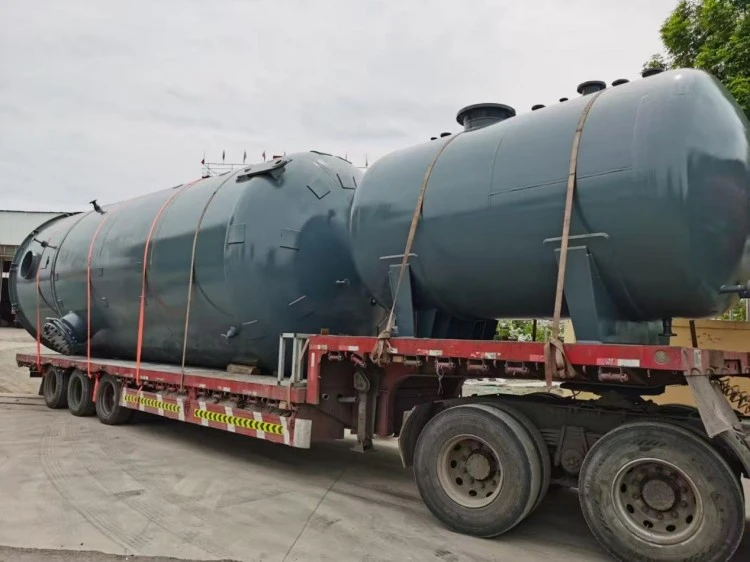
Once the design is confirmed, the project proceeds to the manufacturing stage for the exhaust gas heat exchanger.
Chunlei handles fabrication, welding, assembly, and quality inspection, ensuring the manufacturing process adheres to the confirmed engineering plan.
Installation and Commissioning Support
Following delivery of the exhaust gas heat exchanger, we provide installation guidance, operating instructions, and technical support for commissioning.
Our engineering team is also available to assist in analyzing any on-site issues regarding heat transfer capacity, pressure drop, connections, or operation.
Please send us details regarding your flue gas flow rate, inlet temperature, target outlet temperature, flue gas composition, the medium to be heated, and the operating pressure. Based on this information, our engineering team can conduct a preliminary thermal analysis and develop an equipment design proposal.
Hot Tags: exhaust gas heat exchanger, China exhaust gas heat exchanger manufacturers, suppliers, factory, heat exchanger equipment, heat exchanger heating, heat exchanger service, heating system heat exchanger, mechanical heat exchanger, Tube Sheet Heat Exchanger


