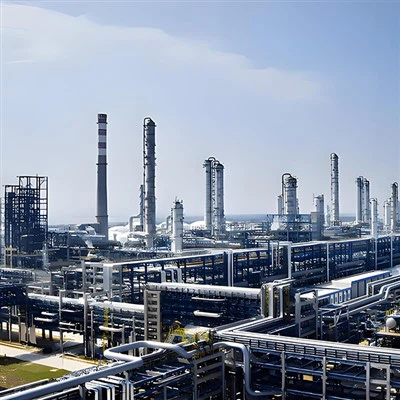
Choosing a Distillation Column Is a Process Decision, Not Just an Equipment Purchase
Distillation is one of the most widely used separation processes in the chemical and petrochemical industries. From crude oil fractionation and solvent recovery to alcohol purification and fine chemical production, distillation columns play a critical role in achieving the required product purity and production capacity.
However, choosing the right distillation column is not as simple as selecting a standard vessel from a supplier's catalog.
The wrong column design can result in poor separation efficiency, excessive energy consumption, unstable operation, high pressure drop, flooding, entrainment, or even production bottlenecks.
The right design, on the other hand, can deliver stable separation performance, lower operating costs, easier maintenance, and a longer service life.
For this reason, engineers should evaluate the entire process before deciding on the column configuration, internals, materials, and operating conditions.
This guide explains the key factors to consider when selecting a distillation column for chemical, petrochemical, and industrial applications.

Start with the Separation Objective
Before selecting the equipment, define exactly what the column needs to achieve.
The first questions should include:
- What components need to be separated?
- What is the required product purity?
- What is the feed composition?
- What is the feed flow rate?
- What are the operating temperature and pressure?
- What is the required production capacity?
- Are there temperature-sensitive components?
For example, separating two components with relatively close boiling points may require a much more demanding design than separating components with significantly different volatilities.
The required separation determines the number of theoretical stages, reflux ratio, column height, and internal configuration.
In other words, the equipment should be designed around the separation task-not the other way around.
Choose Between Tray and Packed Columns
One of the most important decisions is selecting the right type of column internals.
Tray Columns
Tray columns are commonly used for large-scale industrial applications.
Typical tray types include:
- Sieve trays
- Valve trays
- Bubble-cap trays
Tray columns are often preferred when:
- Large gas and liquid flow rates are involved
- The process requires a wide operating range
- Side draws are required
- The column diameter is relatively large
They also offer relatively straightforward inspection and maintenance.
Packed Columns
Packed columns use structured or random packing to create contact between vapor and liquid phases.
They are often selected when:
- Low pressure drop is important
- Vacuum operation is required
- Heat-sensitive materials are processed
- High separation efficiency is needed
Structured packing can provide a large surface area for mass transfer while maintaining relatively low pressure drop.
For vacuum distillation, packed columns are often an attractive solution because minimizing pressure drop helps maintain the required operating pressure.
Column Diameter Is Critical for Stable Operation
Column diameter is primarily determined by vapor and liquid traffic.
If the column is undersized, excessive vapor velocity may cause:
- Flooding
- Entrainment
- Increased pressure drop
- Reduced separation efficiency
If the column is significantly oversized, the project may incur unnecessary capital costs and poor hydraulic performance at low operating rates.
A properly designed column should provide sufficient capacity while maintaining an appropriate operating margin.
In many applications, engineers target an operating vapor velocity below the flooding limit, commonly using a design margin in the range of approximately 70%–85% of the predicted flooding velocity.
The exact value depends on the process, internals, fluid properties, and project design standards.
This is why column sizing should be based on detailed hydraulic calculations rather than simple empirical rules.
Column Height Depends on Separation Requirements
Column height is closely related to the required separation performance.
For tray columns, engineers consider:
- Number of theoretical stages
- Tray efficiency
- Tray spacing
- Feed location
- Reflux requirements
For packed columns, the design may be based on:
- Number of theoretical stages
- HETP
- Packing type
- Required packing height
A higher column does not automatically mean better separation.
The objective is to achieve the required separation using the most economical combination of:
- Column height
- Internal configuration
- Reflux ratio
- Energy consumption
Good design balances performance with capital and operating costs.
Pay Attention to Energy Consumption
Distillation is one of the most energy-intensive separation processes in the chemical industry.
The reboiler supplies the energy required to generate vapor, while the condenser removes heat from the overhead vapor.
Improving energy efficiency should therefore be considered from the beginning of the design process.
Potential strategies include:
- Optimizing reflux ratio
- Improving feed preheating
- Integrating heat recovery
- Optimizing reboiler duty
- Reducing unnecessary pressure drop
- Using advanced column internals
In some plants, heat integration between the distillation column and other process units can significantly reduce utility consumption.
For large continuous operations, even a modest reduction in steam or fuel consumption can generate substantial savings over the equipment lifecycle.
Select Materials Based on Actual Operating Conditions
Material selection is another critical factor affecting column reliability.
The correct material depends on:
- Process fluid composition
- Operating temperature
- Operating pressure
- Corrosion mechanisms
- Chloride concentration
- Hydrogen exposure
- Expected service life
Common material options include:
- Carbon steel
- Stainless steel 304
- Stainless steel 316L
- Duplex stainless steel
- Hastelloy and other nickel alloys
For corrosive chemical services, choosing the lowest-cost material may create significant maintenance problems later.
Engineers should consider not only initial material cost but also corrosion allowance, inspection requirements, expected service life, and replacement costs.
Don't Overlook Column Internals
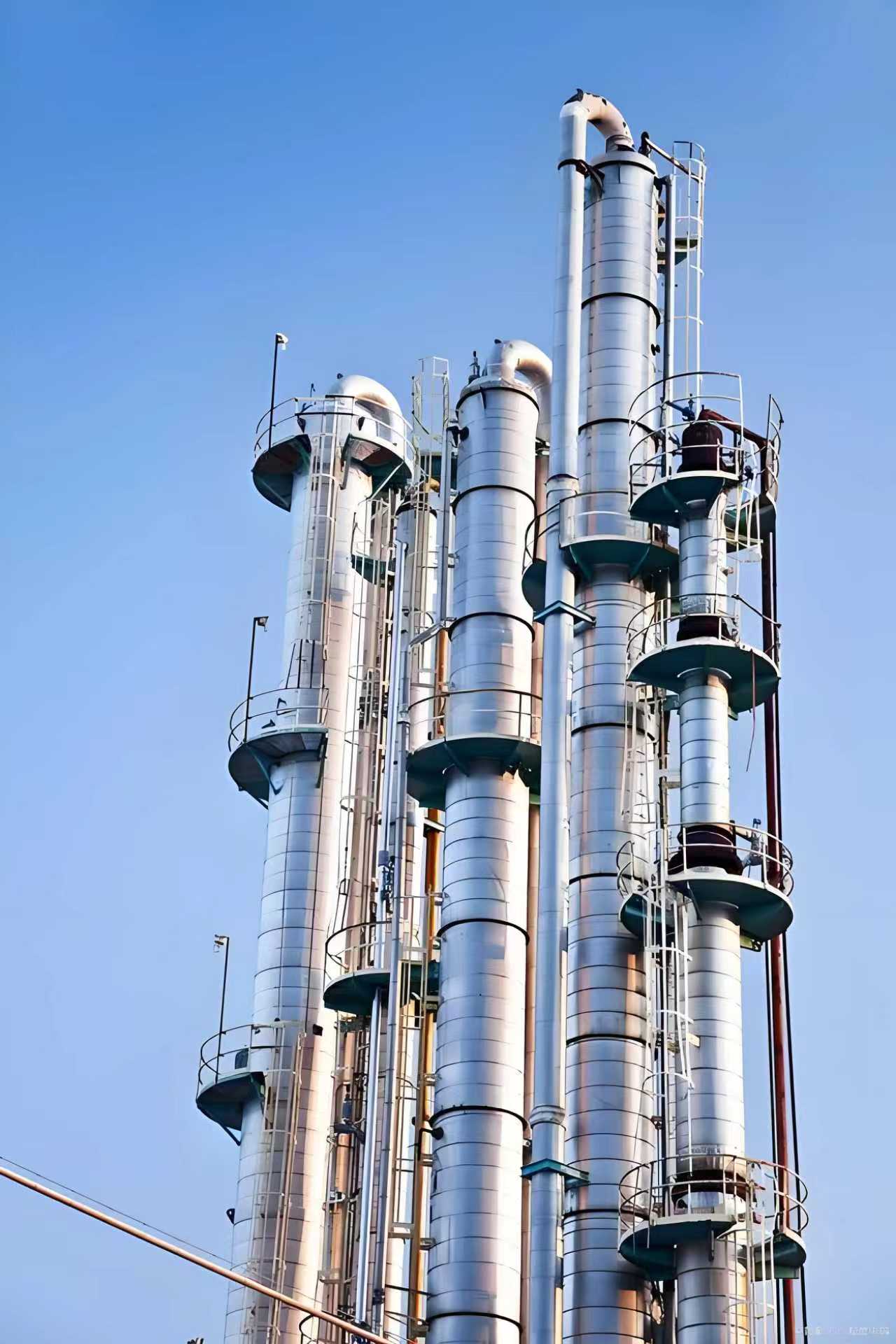
The shell is only one part of a distillation column.
Internals often determine actual separation performance.
Depending on the application, a column may include:
- Trays
- Structured packing
- Random packing
- Liquid distributors
- Redistributors
- Demisters
- Support grids
- Feed distributors
- Chimney trays
Poorly designed liquid distribution can cause channeling and reduce the effective mass transfer area.
In packed columns, a high-quality liquid distributor is particularly important.
Even excellent packing cannot deliver its expected performance if liquid distribution is uneven.
This is why internal design should receive the same level of engineering attention as the column shell.
Consider Maintenance and Inspection Requirements
A distillation column may operate continuously for thousands of hours per year.
Eventually, however, it will require inspection, cleaning, and maintenance.
Engineers should consider:
- Manhole location
- Internal access
- Packing removal
- Tray inspection
- Distributor maintenance
- Cleaning requirements
- Spare parts availability
A maintenance-friendly column can reduce turnaround time and minimize production losses.
For large chemical and petrochemical plants, reducing even a few days of unplanned downtime can have a major financial impact.
Choose a Supplier with Real Engineering Capability
A distillation column is a process equipment package, not simply a fabricated pressure vessel.
A qualified supplier should understand:
- Process simulation
- Mass and heat balance
- Hydraulic calculations
- Mechanical design
- Material selection
- Internals design
- Fabrication
- Inspection and testing
For complex projects, the supplier should also be able to coordinate with:
- Reboilers
- Condensers
- Pumps
- Piping systems
- Instrumentation
- Control systems
This is where an experienced engineering and manufacturing partner can make a significant difference.
A supplier with integrated engineering capabilities can identify design problems earlier, improve communication between disciplines, and reduce the risk of costly modifications during installation.
When Should You Consider a Custom Distillation Column?
Standard equipment may be suitable for simple applications.
However, customized engineering is often required when the process involves:
- High vacuum
- High pressure
- High temperature
- Corrosive media
- High-purity products
- Large production capacity
- Difficult separation requirements
Custom design allows engineers to optimize:
- Column diameter
- Column height
- Wall thickness
- Internal configuration
- Materials
- Nozzle arrangement
- Support structure
The objective is not simply to build a larger or stronger column.
It is to build a column that matches the process as closely as possible.
Distillation Column Selection Checklist
Before placing an order, engineers should confirm the following:
Process Data
- Feed composition
- Feed flow rate
- Product specifications
- Operating pressure
- Operating temperature
Hydraulic Design
- Column diameter
- Vapor velocity
- Flooding margin
- Pressure drop
Separation Performance
- Number of theoretical stages
- Tray efficiency or HETP
- Reflux ratio
- Feed location
Mechanical Design
- Design pressure
- Design temperature
- Material selection
- Corrosion allowance
Maintenance
- Internal access
- Cleaning requirements
- Inspection access
- Packing or tray replacement
Project Support
- Engineering design
- Fabrication
- Quality inspection
- Installation guidance
- Commissioning support
This checklist can help engineers identify potential issues before equipment fabrication begins.
Why Engineering and EPC Capability Matter
For large chemical and petrochemical projects, a distillation column rarely works as a standalone piece of equipment.
Its performance depends on the entire process system.
At Chunlei Chemical Machinery, we provide customized chemical process equipment solutions covering engineering design, manufacturing, installation support, and EPC project services.
Our capabilities can support projects involving:
- Distillation columns
- Reactors
- Pressure vessels
- Heat exchangers
- Towers and other process equipment
By combining equipment manufacturing with engineering and project execution capabilities, we help customers coordinate the complete process system rather than managing each piece of equipment separately.
This integrated approach can reduce project interfaces, improve equipment compatibility, and simplify communication from engineering through commissioning.
Final Thoughts
Choosing the right distillation column is ultimately about finding the right balance between separation performance, energy consumption, equipment cost, reliability, and long-term maintainability.
The best column is not necessarily the tallest.
It is not necessarily the largest.
And it is certainly not always the cheapest.
The right distillation column is the one that delivers the required product purity at the lowest practical lifecycle cost while remaining stable, safe, and maintainable throughout years of operation.
That is why successful column design starts with process understanding and ends with engineering execution.
For chemical and petrochemical companies planning a new process line, expanding production, or upgrading an existing separation system, working with an experienced engineering and manufacturing partner can make the difference between simply installing equipment and building a separation system that performs reliably for years to come.


Frequently Asked Questions
Chunlei Chemical Machinery provides customized distillation columns and integrated process equipment solutions for chemical, petrochemical, and fine chemical applications.