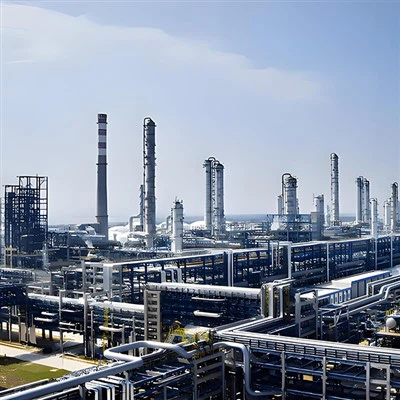
How a Reboiler Heater Operates within a Distillation System
A reboiler heater serves as the thermal engine of a distillation column, driving the separation process by generating the necessary vapor traffic. Positioned at the bottom of the distillation column, the reboiler takes the liquid bottoms product and introduces heat to induce vaporization. This vapor travels back up the column, interacting with descending liquid to achieve precise fractional distillation. Without the continuous heat input from a reliable distillation column reboiler, the entire separation sequence stalls.
The Vapor-Liquid Equilibrium (VLE) Cycle
The core operation relies heavily on the Vapor-Liquid Equilibrium (VLE) cycle. Liquid reaching the column bottom enters the shell and tube heat exchanger configuration of the reboiler. As heat transfers from the utility side (typically steam or hot oil) to the process fluid, the volatile components transform into vapor.
- Vapor Return: The generated vapor rises back into the column to strip lighter components from the descending liquid.
- Liquid Product: The remaining unvaporized liquid is drawn off as the bottom product or recycled.
The Balance of Heat Duty
Maintaining the correct thermal balance is crucial. Reboiler duty calculation parameters dictate exactly how much energy must be transferred to achieve the desired vaporization fraction. If the heat duty is too low, product purity drops; if it is too high, the column risks flooding or wasting energy.

Key Parameters in Reboiler Operation
Optimizing a process fluid heating bundle requires monitoring several operational variables to maximize heat transfer efficiency and prevent equipment fouling.
| Parameter | Operational Impact | Target Management |
|---|---|---|
| Vaporization Fraction | Dictates percentage of liquid turned to vapor | Kept within safe design limits to prevent dry-out |
| Heat Flux ($q/A$) | Measures heat transfer rate per unit area | Controlled to avoid film boiling and tube damage |
| Circulation Rate | Governs fluid velocity through the tube bundle | Optimized to reduce tube bundle maintenance costs |
| Temperature Differential ($Delta T$) | Drive force between heating medium and process fluid | Balanced to maximize efficiency without causing thermal stress |
Types of Reboiler Heaters
Choosing the right reboiler heater configuration is critical for maximizing distillation column efficiency. Different process conditions require distinct fluid dynamics and heat transfer methods. We manufacture four primary types of industrial reboiler heaters engineered to meet diverse North American processing demands.
A. Kettle Reboilers (Kettle-Type Vaporizers)
Kettle reboilers feature an oversized shell that creates a built-in vapor-liquid disengagement space. The shell and tube heat exchanger bundle sits submerged in the process liquid, heating it until it boils.
- How it works: Liquid from the bottom of the distillation column enters the shell side. Vapor rises off the pool and returns to the column, while a weir maintains the liquid level over the process fluid heating bundle.
- Best for: High vaporization fractions, fluctuating vapor loads, and applications requiring easy tube bundle maintenance.
- Key Advantage: Low maintenance and reliable operation because it does not rely on precise feed hydraulics.
B. Thermosyphon Reboilers (Natural Circulation)
Thermosyphon reboilers rely on natural hydrostatic pressure differentials to drive thermosyphon reboiler circulation without a pump. They can be installed horizontally or vertically.
- How it works: The density difference between the cold liquid feed and the heated, boiling vapor-liquid mixture creates a natural driving force that circulates the fluid through the heat exchanger tubes.
- Best for: High-vacuum systems, clean fluids, and high-heat transfer efficiency requirements.
- Key Advantage: Highly cost-effective with lower capital costs and zero power consumption for circulation.
C. Forced Circulation Reboilers
When process fluids are highly viscous, fouling-prone, or slurry-heavy, a forced circulation reboiler pump is integrated into the loop to maintain high velocities.
- How it works: A dedicated pump mechanically forces the process fluid through the tubes at high velocity, suppressing boiling until the fluid exits the exchanger into the flash separator or column.
- Best for: Heavy crude fractions, viscous polymers, and high-fouling chemical processes.
- Key Advantage: Precise control over fluid velocity prevents localized overheating and drastically reduces tube scaling.
D. Fired Reboilers (Direct-Fired Furnaces)
For extreme temperature demands where steam or thermal fluids cannot provide enough heat duty, a fired reboiler heater utilizes direct combustion.
| Feature | Details |
|---|---|
| Heat Source | Direct gas or oil burner combustion |
| Temperature Range | High-temperature applications (>500°F / 260°C) |
| Typical Use Case | Petroleum refinery fractionators and crude distillation bottoms |
| Core Benefit | Eliminates the need for secondary utility heating loops |
Our industrial chemical machinery factory provides custom reboiler fabrication tailored to your specific process hydraulics, ensuring optimal heat transfer efficiency across all four configurations.

Industrial Applications and Sector Demands
Every heavy industrial plant relies on precise temperature control to keep production moving. As a dedicated industrial chemical machinery factory, we build each distillation column reboiler to handle the heavy-duty thermal loads demanded by major US processing sectors.
Petroleum Refining
Refineries run around the clock and demand absolute reliability. In crude oil distillation and fractionating columns, a heavy-duty fired reboiler heater or a robust shell and tube heat exchanger is essential for separating hydrocarbons into usable fuels.
- High-Temperature Operation: Manages bottom products under extreme heat.
- Fouling Resistance: Designed to handle heavy crude fractions without frequent shutdowns.
- Boiling Efficiency: Optimizes the vaporization fraction to maximize gasoline and diesel yield.
Chemical Processing
Chemical plants require strict adherence to exact chemical reactions and purity standards. Whether it is separating solvents or purifying intermediate compounds, our custom reboiler fabrication ensures maximum heat transfer efficiency.
- Corrosive Fluid Handling: We utilize specialized alloys to resist aggressive chemical attacks.
- Precise Reboiler Duty Calculation: Custom-engineered to match the exact thermal profile of your process fluid.
- System Versatility: Seamlessly integrates with both kettle reboiler design and thermosyphon reboiler circulation systems.
Pharmaceuticals & Fine Chemicals
When it comes to pharmaceuticals, there is zero room for contamination. High-purity separations require highly specialized, cleanable heat transfer surfaces that protect delicate product batches.
| Sector Demand | Technical Solution | Operational Benefit |
|---|---|---|
| Ultra-Pure Separation | High-polish stainless steel bundles | Prevents batch contamination |
| Thermal Sensitivity | Controlled process fluid heating bundle | Eliminates product degradation |
| Frequent Cleaning | Accessible tube bundle maintenance design | Reduces downtime between batch runs |
Engineering Design & EPC Integration Requirements
We understand that integrating a reboiler heater into a major distillation system requires flawless engineering alignment. For Engineering, Procurement, and Construction (EPC) partners in the United States, compliance, material integrity, and seamless collaboration are non-negotiable. We design and fabricate our equipment to plug directly into your process flow without compatibility delays.
TEMA Standards Compliance
Every shell and tube heat exchanger and distillation column reboiler we manufacture strictly adheres to TEMA (Tubular Exchanger Manufacturers Association) standards. We primarily build to TEMA Class R and Class C specifications to meet the rigorous safety demands of American chemical and petroleum facilities.
- TEMA Class R: For severe petroleum and heavy-duty processing.
- TEMA Class C: For general commercial and moderate chemical applications.
- ASME Code Stamping: All units feature standard ASME Section VIII, Div 1 stamping to guarantee pressure vessel safety under extreme thermal loads.
Material Selection Matrix
Corrosion resistance and heat transfer efficiency depend heavily on selecting the correct metallurgy. Our industrial chemical machinery factory utilizes a strict material matrix to match your specific process fluid heating bundle requirements:
| Process Fluid Environment | Recommended Tube & Shell Material | Primary Benefit |
|---|---|---|
| Mild Hydrocarbons / Non-Corrosive | Carbon Steel (SA-516 Gr. 70 / SA-106B) | Cost-effective, high structural strength |
| Sour Crude / Organic Acids | 304/316 Stainless Steel | High oxidation and general corrosion resistance |
| High-Chloride / Aggressive Media | Duplex Stainless Steel (2205) / Titanium | Exceptional resistance to pitting and stress cracking |
| High-Temperature Steam | Chrome-Moly Alloys | Resists creep and thermal deformation |
EPC Partner Alignment
We streamline the procurement workflow for EPC firms by acting as an extension of your internal engineering team. Our custom reboiler fabrication process is structured around US project management timelines.
- BIM & 3D CAD Modeling: We provide native STEP or AutoCAD files early in the design phase to simplify your plant piping layout.
- Vaporization Fraction Optimization: We cross-check thermal rating data (using HTRI software) with your process engineers to prevent vapor locking and film boiling.
- Quality Documentation: Complete Manufacturing Data Books (MDB)-including weld maps, NDE/NDT test results, and material test reports (MTRs)-are delivered standard with every reboiler heater.
- Maintenance-First Layouts: We optimize the shell design for easy tube bundle maintenance, pulling, and cleaning, minimizing future plant downtime.


Commercial Evaluation: Reboiler Heater Price Factors & Procurement
When you're looking at the bottom line for a reboiler heater, the sticker price is rarely just about the metal. As a manufacturer, I see three main drivers that dictate your total investment. Understanding these helps you balance initial CAPEX with long-term ROI.
Raw Material Costs
The choice of metallurgy is the biggest price swing. While carbon steel is the budget-friendly standard, most U.S. chemical and refining operations require high-performance alloys to handle corrosive process fluids.
- Stainless Steel (304/316): Moderate price increase for corrosion resistance.
- Duplex & Super Duplex: Higher cost, but essential for high-chloride environments.
- Nickel Alloys: Premium pricing for extreme temperature and acid applications.
Design Complexity
A custom distillation column reboiler isn't a one-size-fits-all product. The more complex the internal geometry, the higher the labor and engineering costs.
- Surface Area: Larger tube bundles naturally increase material and assembly time.
- Vaporization Fraction: High-performance designs meant to prevent film boiling require precision engineering.
- Configuration: A simple kettle reboiler has different cost structures compared to a specialized forced circulation reboiler that requires integrated pump skids.
Manufacturing Standards
In the United States market, ASME Section VIII compliance is non-negotiable for safety and insurance.
- Certifications: Shop stamps (U, R, or S) add to the overhead but guarantee quality.
- Testing: Requirements for X-ray (radiography), ultrasonic testing, or hydro-testing impact the final reboiler heater price.
- TEMA Classes: Whether your project calls for TEMA C, B, or R (the most rugged) will shift the price point based on the thickness of the parts and the strictness of the tolerances.
| Price Factor | Impact Level | Strategy for Savings |
|---|---|---|
| Material Choice | High | Use clad materials instead of solid alloys where possible. |
| Fouling Margin | Medium | Don't over-engineer; use accurate fluid data to size the bundle. |
| Lead Time | Variable | Plan procurement early to avoid "rush" fabrication premiums. |
Getting a custom reboiler fabrication right means looking past the initial quote. We focus on heat transfer efficiency and ease of tube bundle maintenance to ensure your procurement choice doesn't become a maintenance headache two years down the road.
Selecting Your Manufacturing Partner: Chunlei Chemical Machinery
Choosing the right reboiler heater manufacturer directly impacts your plant's uptime, energy efficiency, and safety. At Chunlei Chemical Machinery, we design and build heavy-duty thermal process equipment that meets the exact demands of United States industrial plants and engineering firms. We don't just build hardware-we deliver certified thermal performance.
Precision Engineering Pedigree
Our engineering team utilizes advanced thermal rating software and mechanical design tools to eliminate common field failures like vapor binding, fluid pulsation, and accelerated tube erosion. Every industrial chemical machinery factory can weld metal, but our pedigree lies in precision thermal hydraulic design. We ensure your custom reboiler fabrication handles fluctuating column loads without sacrificing the heat transfer efficiency your process requires.
Our Capabilities
We operate a fully integrated production facility capable of handling diverse alloys, heavy wall thicknesses, and high-precision machining. Our manufacturing capabilities are tailored to deliver high-performance shell and tube heat exchanger configurations built to last.
| Capability | Specifications & Range | Market Standards |
|---|---|---|
| Design Standards | ASME Section VIII Div 1, TEMA (Class R, C, B) | National Board Inspection Code (NBIC) |
| Material Selection | Carbon Steel, 304/316 SS, Duplex, Hastelloy, Titanium | ASTM / ASME Material Specifications |
| Shell Diameters | Up to 120 inches (3,048 mm) | Custom sizing per distillation load |
| Hydrostatic Testing | Up to 15,000 psi digital tracking | Built-in quality control and traceability |
Why Partners Choose Chunlei
United States EPC firms and plant operators partner with us because we eliminate procurement friction and lower the total cost of ownership.
- Transparent Reboiler Heater Price Structure: We break down heat exchanger price factors clearly, from raw material surcharges to design complexity, avoiding hidden lead-time costs.
- Streamlined Tube Bundle Maintenance: Our designs prioritize operational reality. We engineer pull-able process fluid heating bundle layouts that simplify cleaning, inspection, and rapid turnaround maintenance.
- Direct EPC Integration: We speak the language of project engineers. From complete data sheets to detailed welding documentation, we provide the exact engineering deliverables needed for rapid field installation.


Frequently Asked Questions (FAQs) About Reboiler Heaters
What is the main difference between a kettle reboiler and a thermosyphon reboiler?
The main differences come down to fluid movement, space, and how they handle vaporization fraction.
- Kettle Reboiler Design: Acts as a pool boiling system. The shell and tube heat exchanger shell is oversized to allow vapor to disengage naturally from the liquid. It provides high reliability and handles high vaporization fractions easily, but requires more footprint.
- Thermosyphon Reboiler Circulation: Relies on natural circulation driven by hydrostatic pressure density differences. It offers incredible heat transfer efficiency and a smaller footprint but requires a tight, well-calculated piping layout to maintain natural flow.
How do you calculate reboiler heater duty for custom fabrication?
To find the total reboiler duty calculation for a custom reboiler fabrication, we look at both sensible heat (raising the liquid temperature) and latent heat (vaporizing the process fluid).
The basic formula used by our engineering team is:
$$Q = dot{m} cdot C_p cdot Delta T + dot{m}_v cdot Delta H_v$$
Where:
- $Q$ = Total thermal duty required
- $dot{m}$ = Total mass flow rate of the bottom liquid
- $C_p$ = Specific heat capacity of the liquid
- $Delta T$ = Temperature difference to reach boiling point
- $dot{m}_v$ = Mass flow rate of the generated vapor
- $Delta H_v$ = Latent heat of vaporization of the fluid
What causes fouling in a distillation column reboiler?
Fouling degrades heat transfer efficiency and increases pressure drops over time. The most common culprits in an industrial distillation column reboiler include:
- Thermal Degradation: High skin temperatures on the process fluid heating bundle causing organic cracking or coking.
- Sedimentation: Suspended solids settling in low-velocity zones, especially in a forced circulation reboiler pump setup if flow rates drop.
- Scaling & Polymerization: Chemical reactions or mineral deposits sticking directly to the tube walls, which demands regular tube bundle maintenance.
Why do EPC requirements demand ASME or TEMA compliance for reboiler heaters?
For US-based projects, meeting EPC engineering requirements isn't optional; it is a safety and legal mandate.
- Safety & High Pressure: Compliance with ASME Section VIII ensures the pressure vessel can safely handle high-temperature, high-pressure chemical processes without catastrophic failure.
- Standardized Maintenance: TEMA Standards Compliance ensures that shell, channel, and tube configurations match global industrial benchmarks, making future repairs, inspections, and cleaning straightforward for maintenance crews.