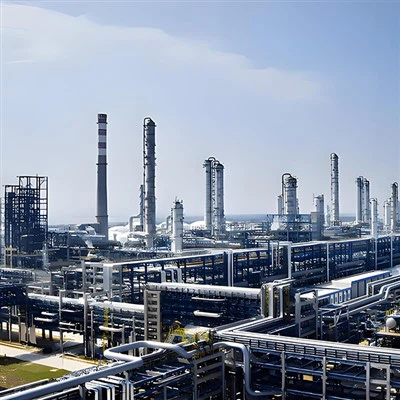
Why Petrochemical Furnaces Are More Than Just Heat Sources
In petrochemical facilities, furnaces are often viewed simply as equipment that provides process heat. In reality, they are among the most critical assets affecting plant productivity, operating costs, emissions, and long-term profitability.
A well-designed petrochemical furnace can increase thermal efficiency, reduce fuel consumption, extend equipment life, and improve process stability. Conversely, poor furnace performance can lead to excessive energy costs, production bottlenecks, unplanned shutdowns, and costly maintenance.
As energy prices continue to rise and environmental regulations become more stringent, optimizing furnace performance has become a strategic priority for refinery and petrochemical operators worldwide.

What Is a Petrochemical Furnace?
A petrochemical furnace is a fired heating system used to transfer thermal energy to process fluids within refining and chemical production facilities.
These furnaces are commonly used in:
- Crude oil distillation units
- Vacuum distillation units
- Ethylene cracking plants
- Aromatics production facilities
- Hydrogen generation units
- Solvent recovery systems
- Natural gas processing plants
- Specialty chemical production lines
Their primary function is to raise process fluid temperatures to the required operating levels while maintaining safe, stable, and energy-efficient operation.
The Hidden Cost of Inefficient Furnace Operation
Many facilities focus heavily on production capacity while overlooking furnace efficiency.
A seemingly small drop in thermal efficiency can have a major financial impact.
For example:
A 50 MW process furnace operating 8,000 hours annually may consume millions of dollars worth of fuel each year.
Even a 5% efficiency loss can result in hundreds of thousands of dollars in additional fuel costs over the furnace lifecycle.
Beyond energy consumption, inefficient furnaces often experience:
- Increased tube skin temperatures
- Accelerated coking formation
- Reduced throughput
- Higher NOx emissions
- More frequent maintenance shutdowns
This is why leading petrochemical companies increasingly evaluate furnace performance based on total lifecycle cost rather than initial purchase price alone.
Key Design Factors That Determine Furnace Performance
1. Heat Transfer Optimization
Efficient heat transfer is the foundation of furnace performance.
Advanced furnace designs focus on:
- Uniform heat flux distribution
- Optimized radiant section geometry
- Enhanced convection section recovery
- Reduced hot spots
Proper heat transfer design helps maximize thermal efficiency while protecting process coils from excessive temperatures.
2. Burner Technology
The burner system directly influences combustion quality and fuel consumption.
Modern low-NOx burners can achieve:
- Stable flame patterns
- Improved fuel-air mixing
- Lower emissions
- Higher combustion efficiency
Advanced combustion controls can continuously adjust fuel and air ratios, ensuring optimal operation across varying process conditions.
3. Coil Material Selection
Process coils operate under extreme temperatures and pressures.
Material selection should consider:
- Operating temperature
- Corrosion resistance
- Thermal fatigue resistance
- Process fluid characteristics
Common materials include carbon steel, chromium-molybdenum alloys, stainless steel, and high-temperature nickel-based alloys.
The correct material selection can significantly extend service life and reduce maintenance costs.
4. Refractory System Quality
The refractory lining serves as the thermal barrier between the combustion chamber and the furnace shell.
Poor refractory performance often results in:
- Excessive heat loss
- Structural damage
- Increased fuel consumption
High-quality refractory systems can reduce shell temperatures and improve overall energy efficiency.


The Growing Importance of Low-Emission Furnace Design
Environmental regulations are reshaping furnace engineering.
Many new projects now require:
- Ultra-low NOx emissions
- Reduced CO emissions
- Improved combustion efficiency
- Lower carbon intensity
Modern petrochemical furnaces increasingly incorporate:
- Low-NOx burner technology
- Flue gas recirculation systems
- Oxygen monitoring systems
- Advanced combustion management controls
These technologies help operators meet environmental targets without sacrificing productivity.
Why EPC Capability Matters in Furnace Projects
A furnace project is rarely just about equipment.
Successful implementation requires coordination between:
- Process engineering
- Mechanical design
- Instrumentation
- Civil works
- Piping systems
- Electrical integration
- Commissioning activities
When multiple contractors are involved, project complexity increases significantly.
This is why many owners prefer furnace suppliers with EPC capabilities.
An integrated EPC approach helps:
- Reduce communication risks
- Shorten project schedules
- Improve quality control
- Simplify project management
- Accelerate plant startup
How Chunlei Chemical Machinery Supports Petrochemical Projects
At Chunlei Chemical Machinery, we believe furnace performance begins long before fabrication starts.
Our engineering team works closely with clients to evaluate:
- Heat duty requirements
- Fuel availability
- Process conditions
- Emission targets
- Site limitations
- Future expansion plans
Beyond equipment manufacturing, we provide:
- Thermal design calculations
- Mechanical engineering
- CFD analysis
- Procurement support
- Installation guidance
- Commissioning assistance
- Technical training
For clients seeking complete project delivery, our EPC capabilities help streamline execution from concept design to plant startup.
Choosing the Right Petrochemical Furnace Partner
Selecting a furnace supplier should not be based solely on equipment price.
A qualified partner should demonstrate:
- Proven engineering expertise
- Industry-specific experience
- Compliance with international standards
- Strong after-sales support
- Lifecycle optimization capabilities
The best furnace is not necessarily the cheapest to purchase-it is the one that delivers the lowest operating cost, highest reliability, and greatest long-term value.
Final Thoughts
Petrochemical furnaces remain at the heart of modern refining and chemical processing operations.
As facilities face increasing pressure to improve efficiency, reduce emissions, and maximize profitability, furnace design has become a strategic investment rather than a simple equipment purchase.
Whether planning a new installation, revamping an existing unit, or evaluating long-term energy savings opportunities, working with an experienced engineering partner can make a measurable difference in project success.
By combining advanced furnace technology, practical engineering expertise, and comprehensive EPC capabilities, Chunlei Chemical Machinery helps clients achieve safer operations, lower energy consumption, and stronger long-term returns on investment.