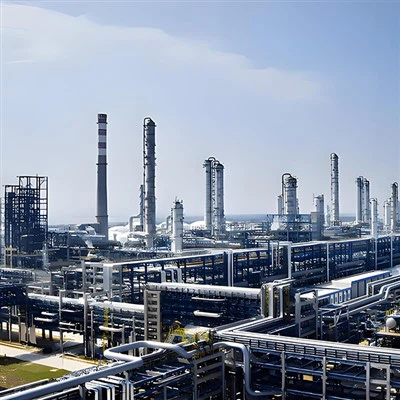
Introduction to Heating Furnaces
In modern manufacturing, a heating furnace plays a critical role in ensuring material performance, product quality, and production efficiency. From steel rolling and forging to advanced material processing, industrial heating furnaces provide the controlled thermal environment required for precise operations.
For buyers and engineers, understanding how a heating furnace works, as well as selecting the right furnace type, directly impacts energy consumption, product consistency, and long-term operational cost.
A heating furnace operates by converting energy into heat and transferring it to materials through radiation, convection, or conduction.


Core Working Mechanisms
There are two primary heating methods:
Electric heating furnace systems
Use resistance or induction to convert electrical energy into heat
Fuel-fired industrial furnaces
Generate heat through combustion of gas, oil, or coal
In advanced systems, heat generated inside the furnace is efficiently distributed across three zones:
Preheating Zone
Uses exhaust heat to improve energy efficiency
Heating Zone
Main high-temperature section for rapid heating
Soaking (Equalizing) Zone
Ensures uniform temperature distribution across the material
This staged design improves thermal efficiency and minimizes defects such as uneven heating or surface oxidation.
Buyer insight
Uniform temperature control is one of the most critical performance indicators when selecting an industrial heating furnace.
Types of Industrial Heating Furnaces
Choosing the right industrial heating furnace type depends on production volume, material type, and automation level.
1.Continuous Heating Furnace
A continuous heating furnace is widely used in high-output production lines such as steel rolling.
Key Features
Continuous material movement
Stable thermal conditions
High productivity and automation
Common Types
Pusher Furnace
Moves billets forward mechanically; cost-effective but may cause surface marks
Walking Beam Furnace
Step-by-step movement ensures uniform heating and reduces material damage
Rotary Hearth Furnace
Ideal for complex-shaped materials; rotating platform improves flexibility
Sectional (Rapid Heating) Furnace
Offers fast heating with reduced oxidation
Application keywords
continuous reheating furnace for steel, high efficiency billet heating furnace
2. Chamber Heating Furnace
Unlike continuous systems, a chamber heating furnace processes materials in batches.
Key Features
Suitable for large or irregular workpieces
High temperature uniformity
Flexible operation
Typical Types
Fixed Hearth Furnace
Simple structure, suitable for small to medium components
Car Bottom Furnace
Designed for heavy loads (up to hundreds of tons), widely used in forging industries
Buyer insight
If your production involves large forgings or low-volume, high-value parts, a chamber furnace is often the better investment.
3. Classification by Heating Technology
Industrial furnaces can also be categorized based on heating methods
Induction Heating Furnace : fast, clean, energy-efficient
Gas-fired Furnace :cost-effective for large-scale production
Electric Resistance Furnace :precise temperature control
Each type offers trade-offs between energy efficiency, control accuracy, and operating cost.
Key Applications of Heating Furnaces
Heating furnaces are essential across multiple industries:
Metallurgy & Steel Processing
Billet reheating before rolling
Heat treatment for improved mechanical properties
Forging Industry
Preheating large ingots
Reducing deformation resistance
Advanced Materials & Electronics
Crystal growth processes
Semiconductor material preparation
General Manufacturing
Pipe bending, welding, and forming
Tool hardening and surface treatment
Proper furnace selection ensures:
Reduced energy consumption
Improved product quality
Longer equipment lifespan


How to Choose the Right Heating Furnace (Buyer Guide)
When sourcing a heating furnace for industrial use, decision-makers should evaluate:
Temperature Uniformity
Directly affects product quality and rejection rate
Energy Efficiency
Look for features like
Waste heat recovery systems
Optimized combustion design
Production Capacity
Match furnace type to throughput requirements
Automation & Control System
Advanced PLC systems improve consistency and reduce labor cost
Maintenance & Lifecycle Cost
Consider refractory materials, burner quality, and spare parts availability
Pro tip
A slightly higher upfront investment in a high-efficiency furnace can reduce operating costs by 10–30% over time.
Conclusion
A well-designed industrial heating furnace is more than just a heating device-it is a core asset that determines production efficiency, product quality, and energy consumption.
By understanding:
Heating furnace working principles
Different furnace types and applications
Key selection criteria
buyers can make informed decisions that improve both operational performance and ROI.