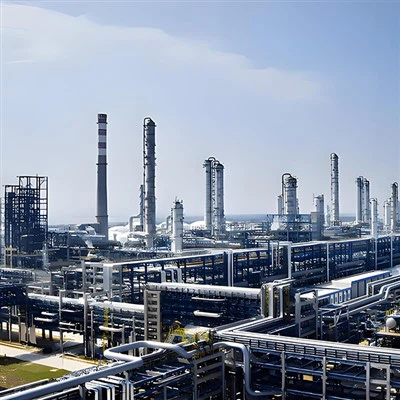
Buying a Heat Exchanger Is Not Just About Finding the Lowest Price
When purchasing an industrial Heat Exchanger, many buyers start with one question:

How much does a heat exchanger cost?
Price is important, but it should not be the first and only question.
A heat exchanger may operate continuously for years under high temperature, high pressure, corrosive fluids, or demanding thermal conditions. A small mistake in material selection, heat-transfer area, tube configuration, or pressure design can result in poor heat-transfer performance, frequent cleaning, leakage, or unexpected maintenance costs.
This is why choosing the right Heat Exchanger manufacturer is often more important than simply finding the lowest quotation.
A reliable supplier should be able to answer four basic questions:
Can the heat exchanger meet my process requirements?
Can the manufacturer actually fabricate the equipment to the required standards?
What factors are driving the Heat Exchanger price?
What technical and after-sales support will I receive after delivery?
This guide explains what industrial buyers should look at before purchasing a heat exchanger.
What Is a Heat Exchanger?
A heat exchanger transfers thermal energy from one fluid to another without allowing the two fluids to mix directly.
Depending on the design, heat exchangers can be used for:
- Process heating
- Process cooling
- Condensation
- Steam heating
- Oil cooling
- Feed preheating
- Waste heat recovery
- Reboiler service
- Industrial temperature control
Common industrial types include:
- Shell and tube heat exchangers
- Floating head heat exchangers
- U-tube heat exchangers
- Tube sheet heat exchangers
- Condensers
- Reboilers
- Customized process heat exchangers
The right configuration depends on the process rather than simply the desired equipment capacity.
Start With Your Process Requirements
Before contacting a Heat Exchanger factory, prepare your process information.
At minimum, you should know:
Hot-Side Information
Fluid type
Flow rate
Inlet temperature
Outlet temperature
Operating pressure
Design pressure
Cold-Side Information
Fluid type
Flow rate
Inlet temperature
Outlet temperature
Operating pressure
Design pressure
Additional Information
Required heat duty
Allowable pressure drop
Fluid viscosity
Fluid density
Corrosiveness
Fouling tendency
Cleaning requirements
The more complete the information, the more accurate the manufacturer's thermal and mechanical design can be.
A supplier that immediately gives you a fixed price without asking for basic process information should be evaluated carefully.
How Is Heat Exchanger Size Determined?
Heat exchanger size is mainly related to the required heat duty and heat-transfer conditions.
A simplified heat-duty calculation for single-phase service is:
Q = m × Cp × ΔT
Where:
Q = heat duty
m = mass flow rate
Cp = specific heat
ΔT = temperature change
The required heat-transfer area is then related to the overall heat-transfer coefficient and temperature driving force.
In practical industrial design, engineers also need to consider:
- Fouling resistance
- Flow arrangement
- Pressure drop
- Fluid velocity
- Tube dimensions
- Number of passes
- Material
- Operating conditions
This is why two heat exchangers with the same physical dimensions can have completely different performance.
Which Heat Exchanger Type Should You Choose?
Shell and Tube Heat Exchanger
Shell and tube heat exchangers are among the most widely used solutions for industrial applications.
They are suitable for:
- Oil refining
- Petrochemical processing
- Chemical plants
- Process heating
- Process cooling
- Condensation
Their advantages include strong mechanical construction, flexible configuration, and suitability for relatively high-pressure and high-temperature services.
Floating Head Heat Exchanger
A floating-head configuration allows greater thermal expansion between the shell and tube bundle.
It can be particularly useful when:
- Temperature differences are significant
- Tube bundle removal is required
- Mechanical cleaning is important
- The process has a high fouling tendency
The additional mechanical complexity can increase the equipment cost, but the maintenance benefits may justify the investment.
U-Tube Heat Exchanger
U-tube heat exchangers use U-shaped tubes to accommodate thermal expansion.
They can be attractive for high-temperature services where differential expansion between the shell and tubes is significant.
However, cleaning the inside of the U-bend can be more challenging.
Tube Sheet Heat Exchanger
Tube-sheet construction provides a robust connection between the heat-transfer tubes and the exchanger structure.
The tube sheet affects:
- Tube support
- Pressure resistance
- Tube sealing
- Mechanical stability
- Tube layout
For demanding process applications, tube-sheet material, thickness, tube-hole machining, and tube-to-tubesheet connection quality all deserve attention.
Material Selection Directly Affects Heat Exchanger Price
One of the biggest factors affecting Heat Exchanger price is material.
Common materials include:
Carbon Steel
A cost-effective option for many general industrial applications where corrosion conditions are manageable.
Stainless Steel 304
Provides improved corrosion resistance for a wide range of industrial services.
Stainless Steel 316L
Often selected for more demanding corrosive environments, depending on the actual process chemistry.
Duplex Stainless Steel
Can provide a combination of high strength and corrosion resistance for specific services.
Nickel-Based Alloys
Used when the process requires higher resistance to particular corrosive or high-temperature environments.
The cheapest material is not necessarily the most economical solution.
For example, saving on the initial purchase price by selecting an unsuitable material can result in:
- Tube corrosion
- Leakage
- Frequent maintenance
- Unplanned shutdowns
- Shorter equipment life
Material selection should therefore be based on the actual process fluid, temperature, pressure, concentration, and corrosion mechanism.
Why Does Heat Exchanger Price Vary So Much?
There is no single standard Heat Exchanger price.
The final quotation can vary substantially because every project may have different engineering requirements.
Key cost factors include:
Heat-Transfer Area
A larger required heat-transfer area generally means more tubes, more material, and a larger exchanger.
Material
Carbon steel, stainless steel, duplex steel, and nickel alloys have significantly different material costs.
Pressure Rating
Higher design pressure can require stronger shells, tube sheets, channels, flanges, and other components.
Temperature
High-temperature applications may require specialized materials and more detailed thermal expansion considerations.
Heat Exchanger Type
A basic fixed-tube-sheet exchanger may cost less than a complex floating-head configuration.
Tube Configuration
Tube diameter, length, number of passes, tube pitch, and tube material all influence manufacturing cost.
Inspection Requirements
Third-party inspection, additional NDT, special testing, and extensive manufacturing documentation can increase project costs.
Customization
Non-standard dimensions, special materials, unusual nozzle arrangements, and project-specific specifications can all affect the quotation.
For this reason, buyers should be careful when comparing two quotations simply by the final number.
A lower price does not necessarily mean a lower total cost.
How to Compare Heat Exchanger Manufacturers
When searching for a Heat Exchanger manufacturer, don't only ask:
"How much is your heat exchanger?"
Ask these questions instead:
Does the manufacturer perform engineering calculations?
A serious industrial manufacturer should be able to evaluate thermal performance, pressure drop, mechanical strength, and material compatibility.
Can the factory manufacture customized equipment?
Industrial process equipment often requires non-standard dimensions and project-specific specifications.
What quality-control procedures are used?
Ask about:
- Material traceability
- Welding control
- Dimensional inspection
- NDT
- Hydrostatic testing
- Final inspection
Can they provide complete documentation?
Depending on the project, documentation may include:
- Material certificates
- Welding records
- NDT reports
- Pressure-test records
- Dimensional inspection reports
- Final manufacturing dossier
Can they work with EPC contractors?
For large industrial projects, communication between the equipment manufacturer, engineering company, EPC contractor, and owner is critical.
A manufacturer experienced in this type of coordination can reduce project execution risks.


Why Buying Directly From a Heat Exchanger Factory Can Be Different
When purchasing through multiple trading layers, communication can become complicated.
A direct Heat Exchanger factory can potentially provide a shorter communication chain between:
Customer → Engineering Team → Manufacturing → Quality Control → Delivery
This can be especially valuable for customized equipment.
Direct factory communication allows technical details to be discussed earlier, including:
- Process requirements
- Material selection
- Drawings
- Nozzle orientation
- Tube configuration
- Inspection requirements
- Delivery schedule
- For standard products, the difference may be relatively small.
For customized industrial equipment, direct communication can make a significant difference.
Heat Exchanger Factory vs. Trading Company
Both can have a role in the market, but buyers should understand the difference.
| Factor | Heat Exchanger Factory | Trading Company |
|---|---|---|
| Direct manufacturing control | High | Depends on supplier |
| Technical communication | Usually direct | May involve multiple parties |
| Customization | Stronger | Depends on factory |
| Production schedule | Directly managed | Depends on supplier |
| Factory inspection | Easier | May require coordination |
| Technical documentation | Usually direct | Depends on manufacturer |
| Price structure | Factory-based | May include additional margin |
| EPC coordination | Usually stronger | Depends on resources |
For complex chemical, petrochemical, and refinery projects, working directly with a capable manufacturer can simplify technical communication.
What Makes a Good Heat Exchanger Factory?
A real manufacturing capability is more than having a workshop and welding machines.
Look at the entire production system.
Engineering Capability
The factory should be able to understand process requirements and convert them into a manufacturable equipment design.
Material Control
Materials should be traceable throughout manufacturing.
Welding Management
Welding procedures, welder qualifications, inspection, and records should be properly controlled.
Tube Manufacturing
Tube-to-tubesheet work requires accurate machining and controlled assembly.
Inspection
Depending on the project, inspection may include:
- Visual inspection
- Dimensional inspection
- NDT
- Hydrostatic testing
- Leak testing
Documentation
A professional industrial equipment manufacturer should be able to provide the documentation required by the project.
Heat Exchanger Factory: Why Chunlei Chemical Machinery?
Chunlei Chemical Machinery is a project-oriented Heat Exchanger manufacturer based in Zibo, Shandong, one of China's major petrochemical industrial hubs.
The company was founded in 2004 and operates from a 30,000 m² manufacturing facility, with registered capital of RMB 50 million.
Unlike a supplier focused only on catalog products, Chunlei works with EPC contractors, engineering companies, and refinery owners on project-specific process equipment. Its capabilities cover engineering coordination, technical clarification, drawing review, material selection, manufacturing feasibility, fabrication, inspection, and delivery.
The Heat Exchanger factory can provide different configurations, including:
- Industrial shell and tube heat exchangers
- Floating head heat exchangers
- U-tube heat exchangers
- Tube sheet heat exchangers
- Commercial heat exchangers
- Industrial condensers
- Column reboilers
- Customized heat-transfer equipment
The equipment can be developed according to specific process conditions, pressure, temperature, material requirements, installation conditions, and project specifications.
Chunlei Heat Exchanger Manufacturing and Quality Control
For indus
trial projects, manufacturing quality is as important as the initial design.
Chunlei states that quality control covers the production process from raw material traceability and welding management through dimensional inspection and final testing. Depending on project requirements, documentation can include material certificates, welding records, NDT reports, dimensional reports, pressure-test records, and final manufacturing documentation.
The company also states that its management systems are certified to:
ISO 9001:2015
ISO 14001:2015
OHSAS 18001:2007
This type of quality system is particularly relevant for customers purchasing equipment for refinery, petrochemical, and chemical projects where traceability and documentation are part of the procurement requirements.
What About Heat Exchanger Price From the Factory?
Customers often want a direct answer:
"How much does a Heat Exchanger cost?"
The honest answer is that a professional manufacturer should calculate the price from the actual equipment requirements rather than publish one fixed price for every project.
For example, the price difference between these two projects could be substantial:
Project A
Carbon steel
Moderate pressure
Standard shell and tube design
Limited inspection requirements
Project B
316L or special alloy
High pressure
Large heat-transfer area
Floating-head configuration
Extensive NDT
Third-party inspection
EPC documentation
Even though both are called "Heat Exchangers," their engineering and manufacturing costs can be completely different.
That is why factory-direct Heat Exchanger pricing should be based on technical specifications, not simply equipment name.
Chunlei can evaluate the process requirements and provide a project-specific quotation rather than relying on a generic catalog price.
How to Get a More Accurate Heat Exchanger Price
If you want a meaningful quotation from a Heat Exchanger manufacturer, prepare these details:Process Data
Fluid name
Flow rate
Inlet temperature
Outlet temperature
Operating pressure
Design pressure
Thermal Requirements
Heat duty
Allowable pressure drop
Fouling factor
Heat-transfer requirements
Mechanical Requirements
Material
Shell diameter, if known
Tube material
Tube diameter
Tube length
Number of passes
Fixed tube sheet / U-tube / floating head
Project Requirements
Design code
Inspection requirements
Documentation requirements
Delivery location
Installation requirements
EPC scope
If some information is unavailable, a professional manufacturer can help identify the missing technical parameters before preparing the final quotation.
Don't Choose a Heat Exchanger Based on Price Alone
The initial equipment price is only one part of the total cost.
A more useful purchasing calculation is:
Total Cost = Purchase Cost + Installation + Energy + Maintenance + Cleaning + Downtime + Replacement
A cheaper exchanger may require more frequent cleaning.
A poorly selected material may have a shorter service life.
An inefficient thermal design may increase energy consumption.
A difficult-to-maintain configuration may increase turnaround costs.
Therefore, the best Heat Exchanger price is not necessarily the lowest quotation.
It is the price that provides the best balance between:
Initial Investment + Operating Cost + Reliability + Service Life
Heat Exchanger Applications
Industrial heat exchangers are used across a wide range of industries.
Oil Refining
Applications include:
Crude oil preheating
Product cooling
Condensation
Feed preheating
Reboiler service
Petrochemical
Heat exchangers can be used for:
Process heating
Process cooling
Feed conditioning
Condensation
Heat recovery
Chemical Processing
Typical applications include:
Reactor temperature control
Solvent heating
Product cooling
Condensation
Evaporation
Energy and Utilities
Heat exchangers can also be used in:
Cooling systems
Steam systems
Waste heat recovery
Industrial water systems
The exchanger configuration should always be selected according to the specific process conditions.
Final Thoughts: What Is the Right Way to Buy a Heat Exchanger?
Buying a Heat Exchanger should not start with:
"Who offers the cheapest price?"
It should start with:
"Who understands my process and can manufacture the equipment correctly?"
Once the process requirements are clear, you can compare:
- Heat-transfer performance
- Materials
- Mechanical design
- Manufacturing capability
- Inspection
- Documentation
- Delivery
- Technical support
- Price
If you are looking for a Heat Exchanger factory, Heat Exchanger manufacturer, or factory-direct Heat Exchanger price, Chunlei Chemical Machinery can provide a project-specific solution rather than treating every customer as a standard order.
With engineering support, customized manufacturing, quality control, technical coordination, and EPC project capabilities, Chunlei is positioned to support not only individual equipment purchases but also larger chemical and petrochemical projects.
The right heat exchanger is not simply the one with the lowest price.
It is the one that delivers the required heat-transfer performance, reliability, maintainability, and lifecycle value at a reasonable total cost.

Frequently Asked Questions
1. How much does a Heat Exchanger cost?
There is no universal Heat Exchanger price. Cost depends on heat-transfer area, material, pressure, temperature, exchanger configuration, inspection requirements, and customization. A factory should quote according to the actual technical specification.2. Where can I buy a Heat Exchanger directly from a factory?
For industrial applications, purchasing directly from an experienced Heat Exchanger factory can simplify technical communication and customization. Chunlei Chemical Machinery manufactures customized heat exchangers for chemical, petrochemical, refinery, and industrial applications.
3. What is the advantage of buying from a Heat Exchanger manufacturer?
A direct manufacturer can provide closer control over engineering, material selection, fabrication, inspection, documentation, and production schedules. This can be particularly valuable for non-standard industrial heat exchangers.
4. Does Chunlei manufacture customized Heat Exchangers?
Yes. Chunlei Chemical Machinery provides customized heat exchangers based on process conditions, thermal requirements, pressure, temperature, materials, installation requirements, and project specifications.
5. What types of Heat Exchangers does Chunlei manufacture?
Chunlei's product range includes shell and tube heat exchangers, floating-head heat exchangers, U-tube heat exchangers, tube-sheet heat exchangers, commercial heat exchangers, industrial condensers, and column reboilers.
6. Can Chunlei provide technical support before purchasing?
Yes. The company provides technical clarification, drawing review, material confirmation, manufacturing feasibility evaluation, and production coordination during project execution.
7. Can Chunlei support EPC projects?
Yes. Chunlei works with EPC contractors and engineering companies and can provide engineering coordination, equipment manufacturing, inspection, delivery, installation support, and commissioning-related services for suitable projects.
8. How can I get a Heat Exchanger quotation?
Provide your fluid information, flow rates, inlet and outlet temperatures, operating pressure, required heat duty, materials, allowable pressure drop, and applicable standards. Chunlei can then evaluate the requirements and prepare a project-specific proposal.