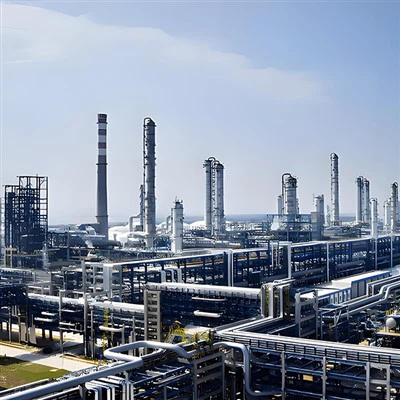
For an engineering project, purchasing a Vertical Cylindrical Fired Heater is not the same as buying a standard industrial heating unit.
The equipment must fit the process design, plot plan, utility conditions, piping system, control philosophy and project specifications. More importantly, the heater needs to work reliably as part of the complete process system rather than operate as an isolated piece of equipment.
For EPC contractors, engineering companies and project procurement teams, the key question is not simply "How much does the heater cost?"
It is:
Can the fired heater meet the process duty, project standards, installation requirements and long-term operating expectations of the plant?
This guide explains the key points engineering project buyers should consider when selecting a Vertical Cylindrical Fired Heater, while showing where Chunlei Chemical Machinery can support the project from equipment engineering through manufacturing and EPC service


What Is a Vertical Cylindrical Fired Heater?
A Vertical Cylindrical Fired Heater is a process heating furnace with a vertically arranged cylindrical combustion chamber.
Fuel is burned through burners, and the resulting high-temperature flue gas transfers heat to process tubes installed inside the furnace.
A typical unit includes:
Radiant section
Process tubes
Burners
Tube supports
Refractory lining
Convection section, where required
Stack
Fuel system
Combustion-air system
Instrumentation
Control and safety systems
This configuration can be used for a wide range of refinery, petrochemical and chemical process applications.
Typical services include:
Hydrocarbon heating
Feed preheating
Process fluid heating
Reactor feed heating
Reboiler service
Crude oil heating
Process gas heating
Thermal-fluid heating
The actual configuration should be determined by the process duty and project requirements.
Why Vertical Cylindrical Fired Heaters Are Suitable for Engineering Projects
One reason engineering companies consider vertical cylindrical designs is their relatively compact footprint.
In a large industrial project, plot space is not an unlimited resource.
The project team may need to accommodate:
Distillation columns
Reactors
Heat exchangers
Storage tanks
Pumps
Compressors
Pipe racks
Maintenance areas
Access roads
A compact heater arrangement can therefore simplify plot planning.
However, footprint should never be the only selection criterion.
The project team also needs to consider:
Heat Duty + Process Conditions + Burner Arrangement + Maintenance Access + Piping + Structural Loads + Safety + Future Maintenance
1. Start With the Process Design
For an EPC project, the fired heater should be selected from the process design basis.
Important data normally includes:
Process fluid
Flow rate
Composition
Inlet temperature
Outlet temperature
Operating pressure
Design pressure
Heat duty
Allowable pressure drop
Fouling tendency
Coking tendency
For example, a heater processing a clean gas stream may have completely different requirements from one heating heavy hydrocarbon feed.
The manufacturer should therefore receive the process design basis before proposing the final furnace configuration.
2. Heat Duty Is Only the Starting Point
Suppose an EPC contractor specifies a required duty of 15 MW.
That number tells the manufacturer how much thermal energy is required, but it does not define the complete heater.
The final engineering design still needs to determine:
Radiant heat-transfer area
Convection heat-transfer area
Tube quantity
Tube dimensions
Heat flux
Burner quantity
Burner arrangement
Fuel consumption
Combustion-air requirement
Stack size
Furnace dimensions
This is why two heaters with the same 15 MW duty may have significantly different designs and prices.
3. Tube Skin Temperature Should Be Included in the Project Specification
For engineering projects, tube skin temperature should not be treated as a secondary parameter.
A process tube may contain a hydrocarbon stream at a certain process temperature while the tube metal is exposed to significantly higher temperatures.
Excessive tube-wall temperature can contribute to:
Coking
Material degradation
Thermal stress
Reduced tube life
Unplanned maintenance
For hydrocarbon services, the design should therefore consider:
Process Temperature + Heat Flux + Tube Material + Flow Velocity + Tube Skin Temperature
This information can also help the EPC team evaluate expected operating conditions during HAZOP and equipment review.
4. Vertical Cylindrical Fired Heater Configuration
A typical vertical cylindrical furnace may include a cylindrical radiant chamber with burners arranged to provide controlled heat release.
The design can be adapted according to:
Required heat duty
Number of process passes
Process tube arrangement
Burner configuration
Fuel type
Furnace height
Convection requirements
Plot-space limitations
For project engineering, the important issue is not simply the external shape.
The entire thermal and mechanical arrangement needs to be coordinated with the process and plant layout.
5. How Does the Heater Connect With the Rest of the Plant?
This is where an EPC-oriented heater supplier can provide significant value.
The heater may need to connect with:
Feed lines
Product lines
Process piping
Fuel-gas system
Combustion-air system
Flue-gas system
Instrument air
Electrical system
DCS
SIS
Emergency shutdown system
Therefore, the equipment supplier should be able to provide accurate information for:
Nozzle locations
Nozzle sizes
Equipment dimensions
Equipment weight
Operating weight
Maintenance clearance
Utility requirements
Foundation loads
Instrument connections
This information is critical for detailed engineering.
6. Plot Plan Is an Important Selection Factor
For a Vertical Cylindrical Fired Heater project, the plot plan should be reviewed early.
Consider:
Equipment Footprint
How much ground area is required?
Heater Height
Will the furnace height interfere with:
Pipe racks?
Overhead lines?
Platforms?
Maintenance cranes?
Maintenance Access
Can operators and maintenance personnel safely access:
Burners
Instruments
Tubes
Inspection points
Convection surfaces?
Piping Arrangement
Can process piping reach the heater without creating unnecessary pressure drop or complicated routing?
A heater that fits the process calculation but creates problems in the plot plan can become expensive during detailed engineering.
7. Burner Selection for Project Applications
The burner system needs to match the project's fuel conditions.
Possible fuels include:
Natural gas
Refinery fuel gas
Process off-gas
Fuel oil
Dual-fuel systems
The project team should provide the fuel composition and pressure whenever possible.
Important burner parameters include:
Fuel capacity
Fuel pressure
Flame shape
Heat-release rate
Turndown
Combustion-air requirement
Emission requirements
The burner should also be positioned to minimize the possibility of flame impingement on process tubes.
8. Fuel Consumption Should Be Included in the Evaluation
For a project with continuous operation, fuel consumption can become a major operating cost.
A simplified relationship is:
Fuel Requirement ≈ Required Heat Duty ÷ Effective Furnace Efficiency
Actual performance depends on:
Fuel heating value
Excess air
Stack temperature
Radiation losses
Convection heat recovery
Combustion efficiency
Operating conditions
For EPC contractors, this information may also be required for:
Utility balance
Fuel-gas system sizing
Operating-cost estimates
Environmental calculations
Plant energy balance
Therefore, fuel consumption should be established during engineering rather than after equipment delivery.
9. Convection Section and Heat Recovery
Depending on the project duty, a vertical cylindrical fired heater may include a convection section for recovering energy from flue gas.
Recovered heat can potentially be used for:
Process feed preheating
Steam generation
Boiler feedwater heating
Combustion-air preheating
The objective is to extract useful energy before the flue gas reaches the stack while maintaining suitable operating conditions.
For a large plant, even a modest improvement in thermal efficiency can translate into significant fuel savings over thousands of operating hours.
10. What Standards Should Engineering Projects Consider?
The applicable codes and standards depend on the project.
For refinery and petrochemical fired-heater projects, the engineering basis may include:
API 560
API 535
API 530
API 556
ASME requirements
NFPA requirements
Local regulations
Customer specifications
The EPC contractor should clearly define:
Applicable Codes + Design Conditions + Inspection Requirements + Documentation Requirements
before equipment manufacturing begins.
This avoids costly engineering changes later.
11. Mechanical Design Must Consider Thermal Expansion
A fired heater operates at high temperature, so thermal expansion must be incorporated into the design.
Components affected include:
Process tubes
Headers
Tube supports
Furnace structure
Stack
Piping connections
Refractory
If expansion is not properly accommodated, it can create excessive stress on the equipment and connected piping.
For EPC projects, this also means that the heater supplier needs to provide reliable information about:
Operating dimensions
Thermal movements
Nozzle loads
Support conditions
Foundation requirements
These details can affect the overall plant design.
12. How Should Process Tubes Be Selected?
Tube material should be based on:
Design temperature
Design pressure
Process composition
Tube skin temperature
Corrosion
Coking tendency
Hydrogen exposure
Expected service life
Potential materials include:
Carbon steel
Low-alloy steel
Stainless steel
High-alloy steel
Heat-resistant alloys
The cheapest material is not necessarily the most economical choice.
For a heater expected to operate continuously for many years, tube reliability can have a much greater financial impact than the initial material-cost difference.
13. Coking Control Is Especially Important for Hydrocarbon Services
When heating hydrocarbon streams, the project team should evaluate coking risk during the initial design stage.
The basic mechanism can be summarized as:
High Tube Temperature → Coke Formation → Higher Thermal Resistance → Higher Tube Temperature
This creates a potentially self-reinforcing problem.
The design can address coking through:
Appropriate heat flux
Suitable process velocity
Proper tube arrangement
Controlled tube skin temperature
Appropriate process temperature
Suitable operating procedures
For EPC projects, this should be considered during both process design and furnace thermal design.


14. What Should Be Included in a Fired Heater RFQ?
If you are an EPC contractor or engineering company preparing an RFQ, provide as much information as possible.
Process Data
Heat duty
Process flow rate
Process composition
Inlet temperature
Outlet temperature
Operating pressure
Design pressure
Allowable pressure drop
Fuel Data
Fuel type
Fuel composition
Fuel pressure
Heating value
Dual-fuel requirements
Site Data
Ambient temperature
Site elevation
Installation location
Available footprint
Utility conditions
Project Requirements
Applicable standards
Emission requirements
Inspection requirements
Documentation requirements
Delivery schedule
Installation scope
Commissioning requirements
The more complete the RFQ, the less likely the project will encounter major technical clarification later.
Chunlei Chemical Machinery for Vertical Cylindrical Fired Heater Projects
Chunlei Chemical Machinery provides customized fired-heater solutions for refinery, petrochemical and chemical engineering projects.
For project customers, Chunlei's role can extend beyond supplying a furnace body.
The engineering and technical scope can include:
Process heat-duty evaluation
Furnace thermal design
Radiant-section design
Convection-section design
Process tube arrangement
Tube material selection
Burner selection
Fuel-system design
Combustion-air system
Draft system
Refractory design
Stack design
Instrumentation
Safety and control systems
Manufacturing
Inspection
Installation support
Commissioning support
For larger projects, Chunlei Chemical Machinery can also participate in an integrated EPC project.
The service can cover:
Engineering → Procurement Coordination → Equipment Manufacturing → Inspection → Delivery → Installation Support → Commissioning → EPC Services
This allows the fired heater to be coordinated with the project's other major equipment and utilities.
Long-Tail Search Terms for Engineering Project Buyers
If your website is targeting engineering companies, EPC contractors and industrial project procurement teams, the content can naturally cover search phrases such as:
Vertical Cylindrical Fired Heater for Petrochemical Plant
Vertical Cylindrical Fired Heater for Refinery
Fired Heater for EPC Project
Petrochemical Fired Heater Manufacturer
Industrial Fired Heater Engineering
Custom Fired Heater for Process Plant
Fired Heater for Chemical Plant
Refinery Furnace Engineering
Process Furnace Manufacturer
Fired Heater Design and Manufacturing
Custom Vertical Cylindrical Furnace
Fired Heater for Oil Refinery Project
Petrochemical Furnace Supplier
Industrial Furnace EPC Project
These terms should be distributed naturally across relevant pages rather than repeatedly inserted into every paragraph.
What Should EPC Contractors Evaluate When Comparing Suppliers?
Instead of comparing only the quoted price, evaluate the supplier across several areas.
| Evaluation Area | What to Check |
|---|---|
| Process Engineering | Heat duty, process conditions, thermal calculations |
| Furnace Design | Radiant/convection sections, heat flux, tube layout |
| Combustion | Burner design, fuel conditions, air control |
| Mechanical Design | Tubes, headers, supports, expansion |
| Materials | Tube and refractory material selection |
| Manufacturing | Welding, fabrication, NDT, dimensional control |
| Documentation | Drawings, calculations, inspection documents |
| Site Support | Installation and commissioning assistance |
| Project Integration | Piping, utilities, DCS/SIS coordination |
| EPC Capability | Ability to support larger engineering scopes |
This approach gives the project team a much clearer understanding of the supplier's actual capabilities.
FAQ
1. What industries use Vertical Cylindrical Fired Heaters?
They are commonly used in refinery, petrochemical, chemical and other process industries where process fluids require controlled high-temperature
heating.
2. Can Chunlei Chemical Machinery customize a Vertical Cylindrical Fired Heater?
Yes. The heater can be designed according to heat duty, process conditions, fuel characteristics, materials, applicable standards and project requirements.
3. Can Chunlei provide fired heaters for EPC projects?
Yes. Chunlei Chemical Machinery can support individual equipment projects as well as larger engineering and EPC scopes, including manufacturing, inspection, installation support and commissioning.
4. What information is required to design a fired heater?
The most important information includes heat duty, process flow rate, fluid composition, inlet/outlet temperature, operating pressure, fuel data and allowable pressure drop.
5. Can the heater be designed according to API requirements?
The applicable design codes and standards can be incorporated according to the customer's project specification and engineering basis, including relevant API requirements where applicable.
6. How long does a fired heater project take?
The schedule depends on the heater size, design complexity, material requirements, inspection scope and project documentation. A detailed schedule should be confirmed after the technical specification is finalized.
7. Does Chunlei provide installation and commissioning support?
Yes. Depending on the project scope, Chunlei Chemical Machinery can provide technical support during installation, commissioning and startup.
8. Can Chunlei supply other process equipment for the same project?
Chunlei Chemical Machinery can coordinate equipment solutions for broader chemical and petrochemical projects, helping customers integrate fired heaters with other process equipment and engineering systems.