


Hey there! As a supplier of Reboiler Heaters, I often get asked about the operating temperature range of these nifty devices. So, let's dive right in and explore what a typical reboiler heater can handle.
Understanding Reboiler Heaters
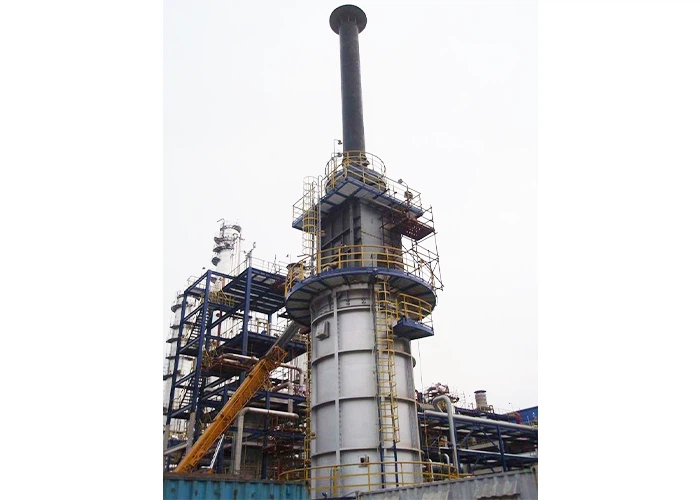
First off, for those who aren't super familiar, a reboiler heater is a crucial piece of equipment in many industrial processes, especially in the petrochemical industry. It's used to heat a liquid stream to a specific temperature, usually to vaporize a portion of it. This process is essential for things like distillation columns, where separating different components of a mixture is key.
Reboiler heaters come in different types, such as kettle reboilers, thermosyphon reboilers, and forced - circulation reboilers. Each type has its own unique characteristics, but they all share the common goal of heating a liquid to a desired temperature.
The Operating Temperature Range
Now, to the main question: what's the typical operating temperature range of a reboiler heater? Well, it can vary quite a bit depending on the application. In general, reboiler heaters can operate anywhere from around 100°C (212°F) to 500°C (932°F).
For applications in the food and beverage industry, where gentle heating is required, the temperature might be on the lower end of the scale. For example, when distilling alcohol, the reboiler might operate at around 100 - 150°C (212 - 302°F). This ensures that the alcohol vaporizes without burning or causing other unwanted chemical reactions.
On the other hand, in the petrochemical industry, where we're dealing with heavy hydrocarbons and complex mixtures, the operating temperatures can be much higher. Petrochemical Furnaces often require reboiler heaters to reach temperatures of 300 - 500°C (572 - 932°F) to effectively separate different components of crude oil.
Factors Affecting the Temperature Range
There are several factors that can influence the operating temperature range of a reboiler heater.
Type of Fluid
The nature of the fluid being heated is a major factor. Different fluids have different boiling points and heat transfer properties. For instance, water has a boiling point of 100°C (212°F) at standard atmospheric pressure, so a reboiler used to heat water will operate at relatively low temperatures. In contrast, heavy oils and bitumens have much higher boiling points, and reboilers used for these substances need to reach much higher temperatures.
Process Requirements
The specific requirements of the industrial process also play a role. Some processes require precise temperature control to ensure the quality of the final product. For example, in the production of high - purity chemicals, the reboiler heater needs to maintain a very stable temperature within a narrow range.
Design of the Reboiler
The design of the reboiler itself can affect the temperature range. Factors such as the type of heat exchanger, the material of construction, and the flow rate of the fluid all impact how efficiently the reboiler can transfer heat and what temperatures it can reach.
Our Reboiler Heaters
At our company, we offer a wide range of Reboiler Heaters that can be customized to meet different temperature requirements. Our engineers work closely with clients to understand their specific needs and design reboilers that can operate within the desired temperature range.
We use high - quality materials and advanced manufacturing techniques to ensure the reliability and efficiency of our reboilers. Whether you need a reboiler for a small - scale laboratory application or a large - scale industrial plant, we've got you covered.
Other Related Heaters
In addition to reboiler heaters, we also supply Crude Heaters for the oil and gas industry. Crude heaters are used to heat crude oil to a temperature where it can be further processed in refineries. These heaters often operate at high temperatures and require robust construction to withstand the harsh conditions.
Contact Us for Your Reboiler Needs
If you're in the market for a reboiler heater or have questions about the operating temperature range for your specific application, don't hesitate to reach out. Our team of experts is ready to assist you in finding the right solution for your needs. Whether you're a small business or a large industrial corporation, we can provide the support and products you need to keep your operations running smoothly.

References
- Perry, R. H., & Green, D. W. (Eds.). (2008). Perry's Chemical Engineers' Handbook. McGraw - Hill.
- Sinnott, R. K. (2005). Chemical Engineering Design: Principles, Practice and Economics of Plant and Process Design. Butterworth - Heinemann.


