


As a supplier of Vacuum Distillation Towers, ensuring the optimal performance of our newly installed equipment is of utmost importance. Testing the performance of a newly installed Vacuum Distillation Tower is a comprehensive process that involves multiple steps and considerations. In this blog, I will share the key aspects of how to test the performance of a newly installed Vacuum Distillation Tower.
Pre - test Preparations
Before initiating the performance tests, several preparatory steps are necessary. First, a thorough inspection of the tower is required. Check for any physical damages, such as cracks in the tower walls, loose connections in the piping, or improper installation of internal components. Ensure that all safety devices, such as pressure relief valves and emergency shutdown systems, are in proper working condition.
Next, prepare the necessary testing equipment. This includes pressure gauges, temperature sensors, flow meters, and analyzers for measuring the composition of the distillates. Calibrate all the testing equipment to ensure accurate measurements.
Leak Testing
One of the first and most crucial tests is the leak test. A Vacuum Distillation Tower operates under low - pressure conditions, and even a small leak can significantly affect its performance. There are several methods for leak testing.
The most common method is the pressure decay test. In this test, the tower is pressurized to a certain level, and the pressure is monitored over a period of time. If the pressure drops more than the acceptable limit, it indicates the presence of a leak. Another method is the helium leak test, which is more sensitive. Helium is introduced into the tower, and a helium detector is used to detect any leaks.
Vacuum System Testing
The vacuum system is a critical component of the Vacuum Distillation Tower. Test the vacuum pump to ensure that it can achieve and maintain the required vacuum level. Measure the ultimate vacuum pressure that the pump can reach and the time it takes to reach that pressure.
Check the vacuum lines for any blockages or restrictions. Inspect the valves in the vacuum system to ensure that they are functioning properly. A malfunctioning valve can prevent the tower from achieving the desired vacuum level.
Temperature and Pressure Profiles
Measure the temperature and pressure profiles along the height of the tower. Install temperature sensors and pressure gauges at different levels of the tower. During the test run, record the temperature and pressure readings at regular intervals.
The temperature profile should follow a specific pattern. Generally, the temperature decreases from the bottom to the top of the tower. Deviations from the expected temperature profile may indicate problems such as inefficient heat transfer or improper feed distribution.
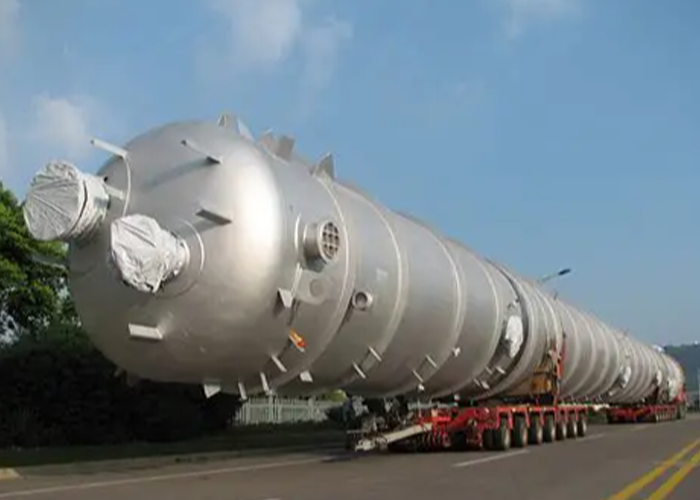

Similarly, the pressure profile should also be within the expected range. A significant deviation in the pressure profile can be a sign of blockages in the tower or problems with the vacuum system.
Feed and Product Analysis
Analyze the feedstock and the products obtained from the distillation process. Use gas chromatography or other analytical techniques to determine the composition of the feed and the distillates.
Compare the actual composition of the products with the expected composition. If there are significant differences, it may indicate problems with the separation efficiency of the tower. For example, if the heavy components are not being separated effectively from the light components, it could be due to issues with the packing material or the reflux ratio.
Packing Efficiency
The packing material in the Vacuum Distillation Tower plays a crucial role in the separation process. To test the packing efficiency, measure the height equivalent to a theoretical plate (HETP). This can be done by analyzing the composition of the vapor and liquid phases at different levels of the tower.
A lower HETP value indicates higher packing efficiency. If the HETP value is higher than expected, it may be necessary to replace the packing material or adjust the operating conditions. You can learn more about Packed Tower on our website.
Comparison with Design Parameters
Compare the test results with the design parameters of the Vacuum Distillation Tower. The design parameters include the expected separation efficiency, the capacity of the tower, and the operating conditions such as temperature and pressure.
If the test results deviate significantly from the design parameters, it is necessary to identify the root cause of the problem. This could be due to incorrect installation, improper selection of equipment, or issues with the feedstock.
Long - term Monitoring
After the initial performance tests, it is important to conduct long - term monitoring of the Vacuum Distillation Tower. Continuously record the operating parameters such as temperature, pressure, flow rate, and product composition.
Analyze the data over time to detect any trends or changes in the performance of the tower. This can help in identifying potential problems before they become serious and in making necessary adjustments to the operating conditions.
Troubleshooting
If any issues are detected during the performance tests, it is important to troubleshoot the problem. Start by reviewing the test results and identifying the possible causes. For example, if the separation efficiency is low, it could be due to problems with the packing, the reflux ratio, or the feed distribution.
Once the possible causes are identified, take appropriate corrective actions. This may involve adjusting the operating parameters, replacing the packing material, or repairing any damaged components.
Conclusion
Testing the performance of a newly installed Vacuum Distillation Tower is a complex but essential process. By following the steps outlined above, you can ensure that the tower is operating at its optimal level. If you are considering purchasing a Vacuum Distillation Tower or need assistance with the performance testing of your existing tower, we are here to help. Our team of experts has extensive experience in the design, installation, and testing of Vacuum Distillation Towers. Contact us to discuss your specific requirements and to start a procurement negotiation.
References
- Perry, R. H., & Green, D. W. (2008). Perry's Chemical Engineers' Handbook. McGraw - Hill.
- Sinnott, R. K. (2005). Chemical Engineering Design. Butterworth - Heinemann.


